New to cocktail shakers or want to sharpen your technique? This guide covers exactly how to use a Cobbler, Boston, and French shaker — from loading ingredients to sealing, shaking, and straining — with tips for avoiding the most common mistakes.
Before You Start: What You Need
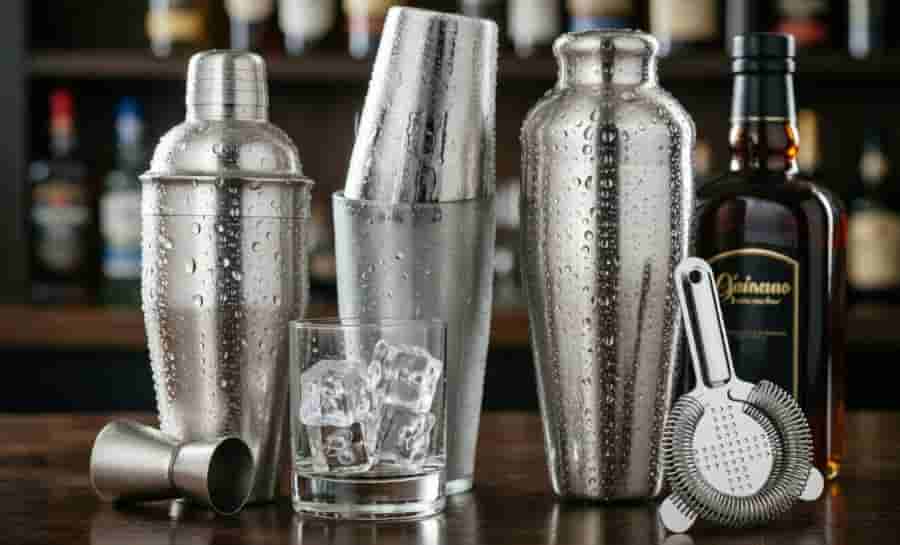
Before picking up your shaker, have the following in place:
Tools:
- Your cocktail shaker (Cobbler, Boston, or French)
- A jigger for measuring ingredients
- A Hawthorne or Julep strainer (required for Boston and French shakers; optional for Cobbler)
- A fine mesh strainer (optional, for double straining)
- A chilled serving glass
Ingredients:
- All liquid ingredients measured and ready
- Fresh ice — use plenty; a well-chilled cocktail needs at least ¾ of the shaker filled with ice
- Any fresh garnishes prepared in advance
General rule on order of ingredients: Add ingredients in this sequence — ice last, just before sealing and shaking. For the liquid ingredients themselves, add cheaper or non-alcoholic components first (juices, syrups, citrus), then the spirit. This way, if you make a measuring error early, you waste less of the expensive ingredient.
How to Use a Cobbler Shaker
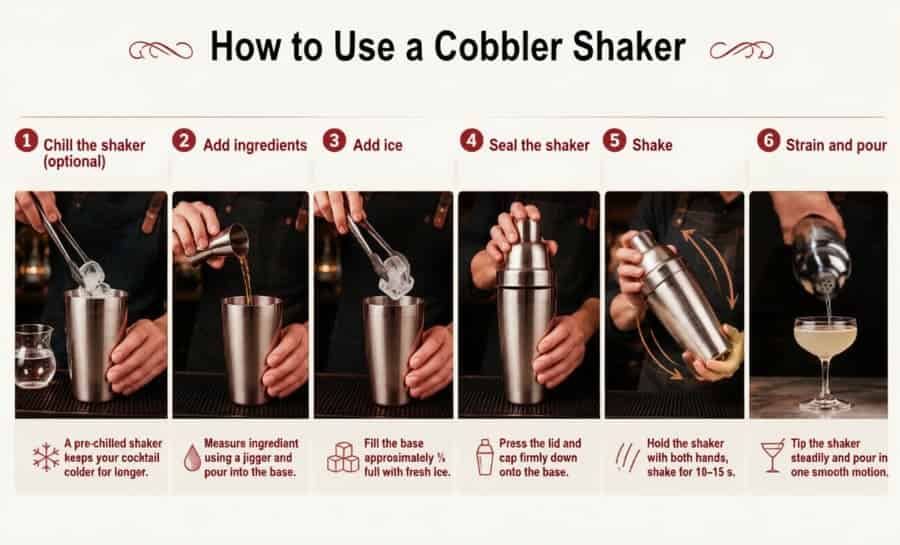
The Cobbler shaker is the most straightforward shaker to use — its three-piece design (base, lid with built-in strainer, cap) is self-contained and requires no separate strainer. It is the best starting point for home bartenders and beginners.
Step 1: Chill the shaker (optional but recommended) Fill the shaker base with ice and cold water, swirl briefly, and discard. A pre-chilled shaker keeps your cocktail colder for longer. Skip this step if time is tight — it is a refinement, not a requirement.
Step 2: Add your ingredients Measure each ingredient using a jigger and pour into the base. Add liquids first — juices, syrups, citrus — then the spirit.
Step 3: Add ice Fill the base approximately ¾ full with fresh ice. Using plenty of ice is important — it chills the drink faster and controls dilution correctly. Do not be shy with ice.
Step 4: Seal the shaker Press the lid firmly down onto the base. You should feel it seat securely. Then place the cap on top of the lid. Give the cap a light press to confirm it is closed.
Step 5: Shake Hold the shaker with both hands — one hand on the base, one on the cap — and shake vigorously for 10–15 seconds. A shaken cocktail should be properly chilled and slightly diluted from the ice; under-shaking produces a warm, unbalanced drink.
Shake with confidence — back and forth in a firm, rhythmic motion. The sound of ice moving freely inside the shaker means the seal is good and the contents are circulating properly.
Step 6: Strain and pour Remove the cap. The built-in strainer in the lid will catch ice as you pour directly into the serving glass. Tip the shaker steadily and pour in one smooth motion.
Tip — stuck lid: After shaking, the temperature change inside the shaker creates a partial vacuum that can seal the lid tightly. If the lid is difficult to remove, hold the base firmly and press your thumb against the side of the lid near the rim — a slight sideways pressure usually breaks the seal cleanly without force.
How to Use a Boston Shaker
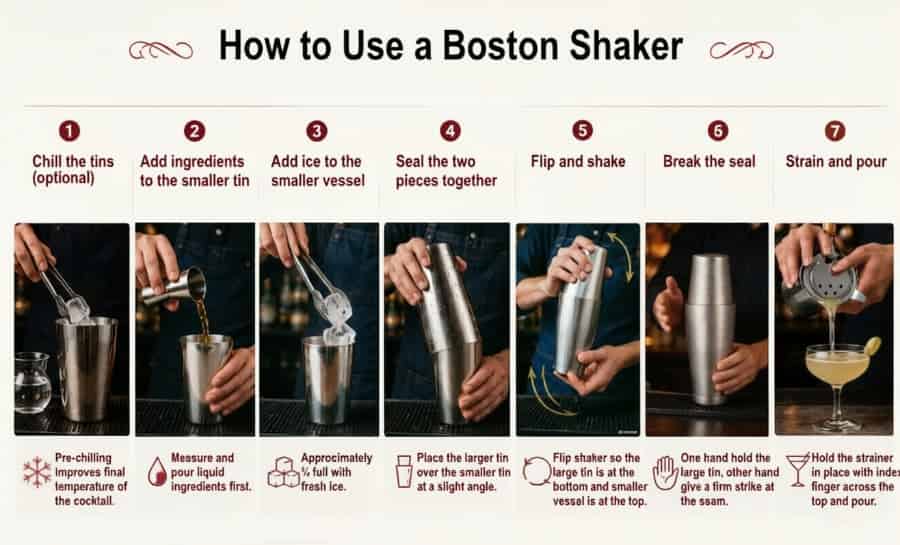
The Boston shaker is a two-piece design — a large tin (base) and a smaller tin or mixing glass. It requires a separate Hawthorne strainer but offers greater capacity, speed, and efficiency than a Cobbler. It is the standard tool in professional bars worldwide.
Step 1: Chill the tins (optional) Rinse both tins with cold water or add ice and discard before use. Pre-chilling improves the final temperature of the cocktail.
Step 2: Add ingredients to the smaller tin or glass Measure and pour your liquid ingredients into the smaller tin or mixing glass first — this is your “build” vessel. Add ice last.
Step 3: Add ice to the smaller vessel Fill approximately ¾ full with fresh ice.
Step 4: Seal the two pieces together Place the larger tin over the smaller tin (or glass) at a slight angle, then press down firmly with the heel of your palm to create a seal. You should feel and hear a solid “thud” as the two pieces lock together. The seal should be firm enough that the shaker does not separate when you pick it up.
Tip: Always place the large tin on top of the small tin — not the other way around. The large tin’s slightly wider mouth creates the seal around the smaller vessel.
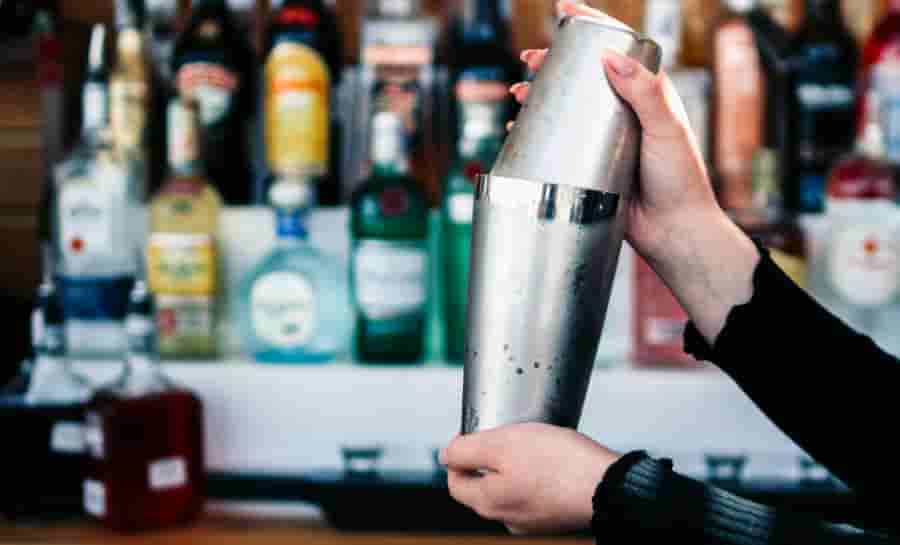
Step 5: Flip and shake With both hands gripping the shaker — one on the large tin, one on the small tin or glass — flip the shaker so the large tin is at the bottom and the smaller vessel is at the top. This positions the weight and liquid correctly for shaking.
Shake vigorously for 10–15 seconds, moving in a confident back-and-forth or up-and-down motion. Keep a firm grip on both pieces throughout.
Step 6: Break the seal After shaking, the two tins will have sealed tighter from the temperature change. To open: hold the large tin in one hand with the seam between the two tins facing toward you. With the heel of your other hand, give a firm strike at the seam — the point where the two tins meet. This breaks the seal cleanly in one motion.
Do not twist or try to pull the tins apart from the top — a sharp strike at the seam is always the correct technique.
Step 7: Strain and pour Place your Hawthorne strainer over the mouth of the large tin. Hold the strainer in place with your index finger across the top and pour steadily into the serving glass. For an ultra-smooth result, hold a fine mesh strainer over the glass simultaneously (double straining).
How to Use a French Shaker (Parisian Shaker)
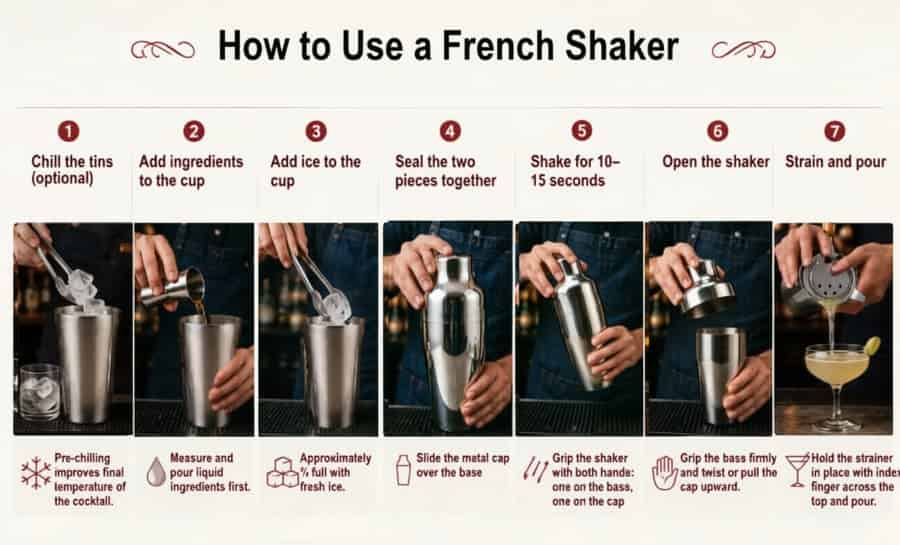
The French shaker — also called a Parisian shaker — is a two-piece metal design with a more elegant, tapered silhouette than the Boston. The technique is almost identical to the Boston shaker, with a few differences in how the seal works.
Steps 1–3: Same as the Boston shaker — chill, add ingredients, add ice.
Step 4: Seal Slide the metal cap over the base. The French shaker’s cap seals differently from a Boston tin-on-tin — it slides into place rather than pressing on at an angle. Ensure the cap is seated evenly around the rim of the base before shaking.
Step 5: Shake Grip the shaker with both hands — one on the base, one on the cap — and shake vigorously for 10–15 seconds. The French shaker is smaller than a Boston (typically 500–600ml) so it requires a secure two-handed grip throughout.
Step 6: Open The French shaker’s cap generally comes off more easily than a Boston tin-on-tin seal. Grip the base firmly and twist or pull the cap upward. If it resists, a light strike at the seam (same as the Boston technique) will release it.
Step 7: Strain and pour Like the Boston, a French shaker requires a separate Hawthorne strainer. Place the strainer over the mouth of the base and pour into the serving glass.
Shaking Technique: How to Shake a Cocktail Correctly
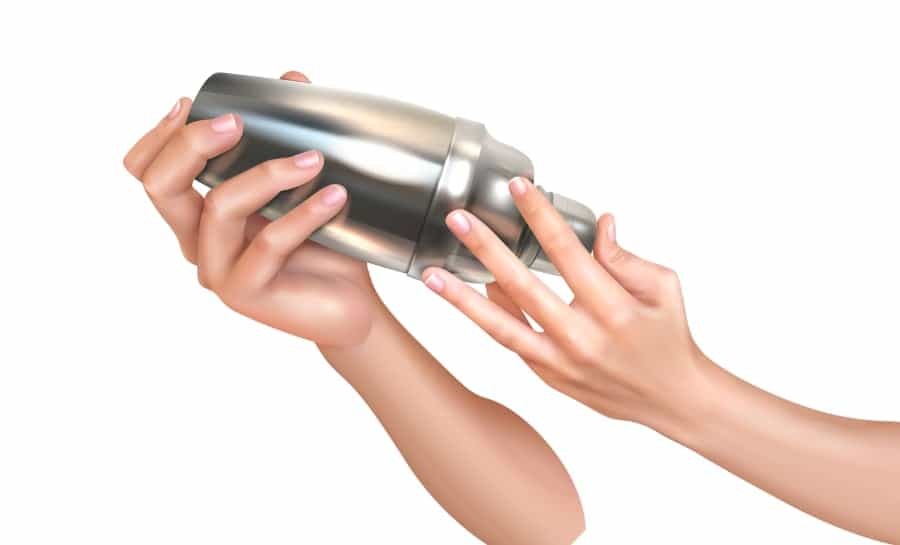
Regardless of shaker type, these fundamentals apply to every shaken cocktail:
Grip firmly with both hands Always use both hands — one on each end of the shaker. A single-handed shake risks losing control, especially as the shaker gets cold and condensation builds up on the outside.
Shake for the right duration
- Standard shaken cocktail (spirit + citrus + mixer): 10–15 seconds
- Egg white or aquafaba cocktails (dry shake first): First shake without ice for 15–20 seconds to emulsify the egg white, then add ice and shake again for 10–15 seconds
- Cream cocktails: 10 seconds is usually sufficient — over-shaking can split cream
Shake vigorously A timid shake under-chills the drink and produces too little dilution. The cocktail should be very cold — the outside of the shaker will frost over — when properly shaken.
Point the seam or cap away from guests When shaking behind a bar, position the shaker so that if the seal were to fail (rare, but possible), liquid would not spray toward guests. Point the cap or the seam of a Boston shaker away from people.
Listen to the ice A well-sealed, correctly filled shaker produces a clear, rhythmic sound of ice moving freely inside. Muffled or absent ice sounds can indicate over-filling (too much ice, not enough room to move) or under-filling (too little ice for proper chilling).
How Long Should You Shake a Cocktail?
A common beginner mistake is under-shaking — stopping after just 5 seconds because the shaker feels cold. The shaker feels cold within seconds, but the drink inside is not yet properly chilled or diluted. Here is a practical guide:
| Cocktail type | Shake time | Notes |
|---|---|---|
| Standard shaken cocktail | 10–15 seconds | Spirit + citrus + mixer |
| Egg white / sour cocktail | 15–20 sec dry + 10–15 sec wet | Dry shake first (no ice) to emulsify |
| Cream cocktail | 8–10 seconds | Over-shaking can split cream |
| Juice-heavy cocktail | 12–15 seconds | More liquid requires slightly longer |
| Double batch (2 serves) | 15–20 seconds | More volume needs more time to chill |
When to Shake vs When to Stir
Not every cocktail is shaken. The rule of thumb:
Shake cocktails that contain citrus juice, egg white, cream, or other opaque ingredients. Shaking emulsifies these ingredients and aerates the drink, producing the right texture.
Stir cocktails made entirely of spirits and clear modifiers — Martinis, Manhattans, Negronis, Old Fashioneds. Stirring chills and dilutes the drink without aeration, preserving the silky, clear texture these drinks are known for.
Shaking a spirit-only cocktail over-aerates it, making it cloudy and slightly foamy — technically a flaw in classic bartending. When in doubt, if the recipe contains juice or dairy, shake. If it contains only spirits and syrups, stir.
How to Clean a Cocktail Shaker
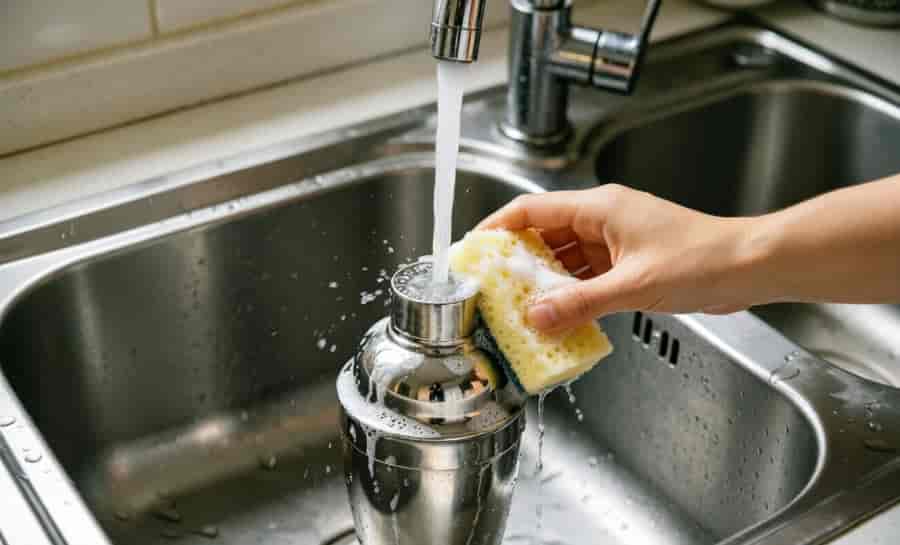
After each use: Rinse all parts immediately with warm water. Do not let citrus juice, egg white, or dairy sit in the shaker — these ingredients cling to surfaces and cause odor if left.
Regular washing: Wash with warm soapy water and a soft cloth or sponge. For a Cobbler shaker, pay particular attention to the strainer holes in the lid — use a small brush to clear any residue.
Drying: Dry all parts fully before storing. Storing a damp shaker with parts assembled traps moisture inside and can lead to odor or, in lower-grade steel, surface corrosion.
For PVD-coated shakers (gold, rose gold, black, gunmetal): Hand wash only — dishwasher detergents can dull the PVD finish over time. Warm water and mild soap maintain the coating.
For hammered finish shakers: The textured surface can trap residue in the recesses. A soft brush helps clean these areas thoroughly after use.
For glass shakers: Handle with extra care during washing — avoid abrupt temperature changes (e.g. hot water on a cold glass) which can cause cracking.
For double-wall insulated shakers: Do not submerge fully in water or put in a dishwasher — the sealed insulation layer can be damaged. Wipe the exterior and rinse the interior only.
Common Mistakes When Using a Cocktail Shaker
Not using enough ice The most common mistake. Under-icing means slower chilling, incorrect dilution, and a warm cocktail. Fill the shaker at least ¾ full with ice every time.
Not shaking long enough 10–15 seconds feels like a long time when the shaker is cold, but it is necessary. A properly shaken cocktail is very cold — the outside of the shaker should be frosted.
Overfilling with liquid Leave enough room for ice and for the liquid to move freely during shaking. Overfilling reduces the effectiveness of the shake and increases the risk of leaks.
Forcing the Boston shaker seal open the wrong way Twisting or pulling the tins apart damages the seal over time. Always use the heel-strike method at the seam to open.
Not pre-chilling the serving glass A properly shaken cocktail poured into a warm glass heats up quickly. Pre-chill glasses by filling them with ice and cold water for a minute before use, then discard before pouring.
Shaking carbonated ingredients Never shake carbonated mixers — soda water, tonic, sparkling wine, Champagne. The carbonation creates pressure that can blow the seal and spray liquid. Add carbonated ingredients after straining, directly into the serving glass.
Frequently Asked Questions
How do you use a cocktail shaker for beginners?
Start with a Cobbler shaker — add your measured ingredients, fill with ice, seal all three pieces, and shake vigorously for 10–15 seconds. The built-in strainer means you can pour straight into the glass without any additional tools. It is the most beginner-friendly shaker design.
How many times do you shake a cocktail shaker?
Shake count is less useful than shake time. Aim for 10–15 seconds of vigorous shaking. If counting helps, a comfortable shaking rhythm produces roughly 40–50 shakes in 10–15 seconds.
Why is my Boston shaker stuck?
The temperature change during shaking creates a partial vacuum that seals the two tins together. To open, hold the large tin firmly and strike the seam with the heel of your other hand — a firm sideways strike at the point where the two tins meet releases the seal cleanly.
Should you shake or stir a Martini?
Stir. A Martini is made entirely from spirits (gin or vodka) and vermouth. Stirring chills and dilutes without aerating, preserving the clear, silky texture the cocktail is known for. Shaking a Martini makes it slightly cloudy and frothy — acceptable as a personal preference but technically incorrect by classic bartending standards.
How full should a cocktail shaker be?
Fill with liquid ingredients first (leaving room for ice), then add ice to approximately ¾ of the shaker’s capacity. Leave some headspace for the liquid and ice to move freely during shaking. Overfilling reduces shaking effectiveness and increases the chance of leaks.
Can you shake cocktails without a strainer?
With a Cobbler shaker, yes — the built-in strainer in the lid handles straining when you pour. With a Boston or French shaker, a separate Hawthorne strainer is always required. Pouring from a Boston tin without a strainer will send ice and solid particles directly into the serving glass.
Sourcing Cocktail Shakers for Your Business?
If you’re a bar supplier, importer, brand owner, or hospitality distributor looking to source cocktail shakers at scale, we manufacture and wholesale the full range — Cobbler, Boston, French/Parisian, Weighted Boston, Double Layer Insulation, Glass, and novelty designs — for B2B clients worldwide.
Why work with us:
- 🏭 Factory direct — competitive wholesale pricing across all shaker styles
- 🎨 Full OEM customization — custom logo (laser engraving, screen print, embossing), surface finish (mirror, brushed, hammered, PVD color), sizing, and packaging
- ✅ Certified & compliant — FDA, LFGB (EU), and ISO certified; full material documentation provided
- 📦 Low MOQ — orders from 200 pcs per SKU
- 🌍 Global shipping — serving clients across North America, Europe, Australia, and Asia
Browse our cocktail shaker product range or contact us for custom OEM solutions.
Related reading: Types of Cocktail Shakers: Cobbler vs Boston vs French Explained | Boston Shaker vs Cobbler Shaker: Which One Is Right for You? | Types of Cocktail Strainers: Hawthorne, Julep, and Fine Mesh Explained | Cocktail Shaker Guide: Types, Materials & How to Choose