Looking to stock the right cocktail shaker — or source the perfect style for your product line? This guide covers the three main types of cocktail shakers, their pros and cons, and how to choose the best one for your needs.
What Is a Cocktail Shaker?
A cocktail shaker is a bartending tool used to mix, chill, and blend drink ingredients — typically a combination of spirits, juices, syrups, and ice. Most shakers consist of two or three parts: a base that holds the liquid and ice, a lid or cap, and sometimes a built-in strainer. They are available in various styles, sizes, and materials including stainless steel, glass, and plastic, and are an essential tool for both professional bartenders and home mixologists.
Why Use a Cocktail Shaker? Key Advantages
A good cocktail shaker does more than just mix ingredients. Here’s why it’s a staple behind every serious bar:
Thorough mixing — Shaking fully combines spirits, juices, syrups, and other ingredients, ensuring a balanced flavor profile in every pour.
Rapid chilling — Contact with ice during shaking drops the drink temperature quickly, delivering that perfectly cold, refreshing result without over-diluting.
Consistent results — A shaker gives bartenders a repeatable, controlled method for crafting the same drink to the same standard every time — essential in high-volume bar environments.
Built-in straining — Most shakers include a strainer or are used with one, filtering out ice chips, fruit pulp, herb fragments, and other solids before pouring.
Showmanship — The visual and auditory ritual of shaking a cocktail adds to the guest experience, making it a theatrical part of bar service.
Professional presentation — A well-shaken cocktail — properly chilled, correctly diluted, cleanly strained — simply looks and tastes more refined.
The 3 Main Types of Cocktail Shakers
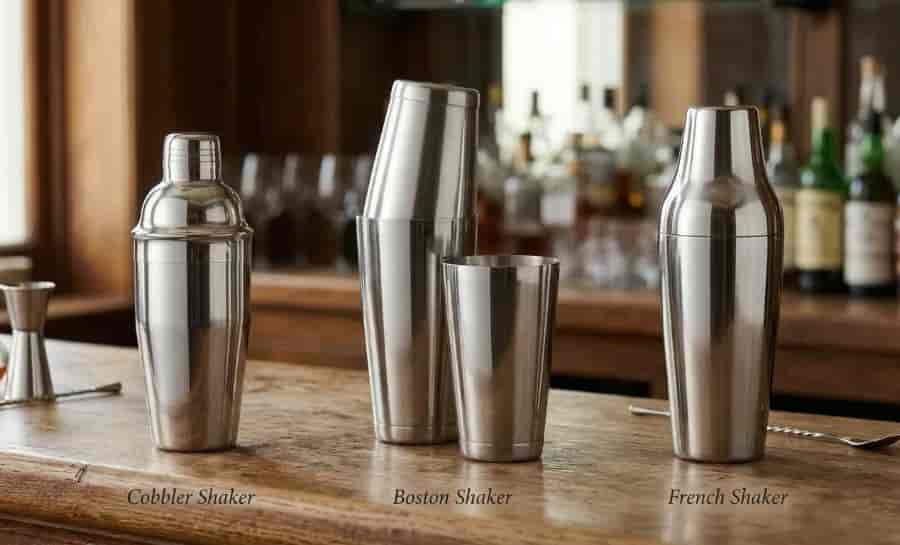
There are three distinct cocktail shaker styles used in bars and home bartending worldwide. Each has its own design, best use case, and trade-offs. Understanding the differences helps you — or your customers — choose the right tool for the job. To better understand how different shaker types compare, see our detailed cocktail shaker guide.
1. Cobbler Shaker
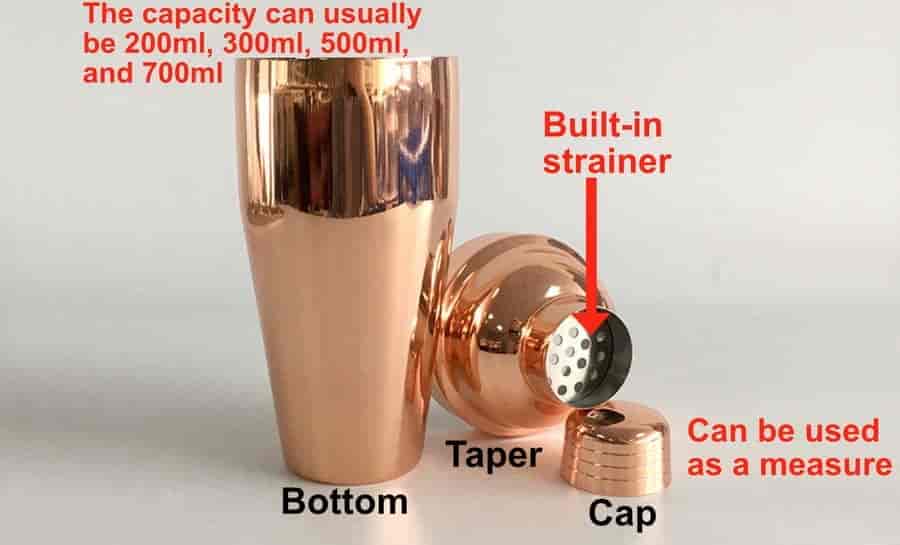
The cobbler shaker is a three-piece design consisting of:
- A base (tin) that holds ice and ingredients
- A lid with a built-in strainer
- A removable cap that doubles as a measuring cup
It is the most widely recognized cocktail shaker style worldwide and the default choice for household use and beginner bartenders.
Pros:
- Easiest to use — no separate strainer required
- Self-contained and travel-friendly
- Cap serves as a spirit measure
- Easy to clean
- Beginner-friendly and widely available
Cons:
- Built-in strainer can clog with ice and pulp during heavy use
- Lid can be difficult to remove after shaking (vacuum seal from temperature change)
- Less preferred by professional bartenders for high-volume service
Best for: Home bars, beginner mixologists, casual entertaining, retail gifting, and branded promotional barware.
2. Boston Shaker
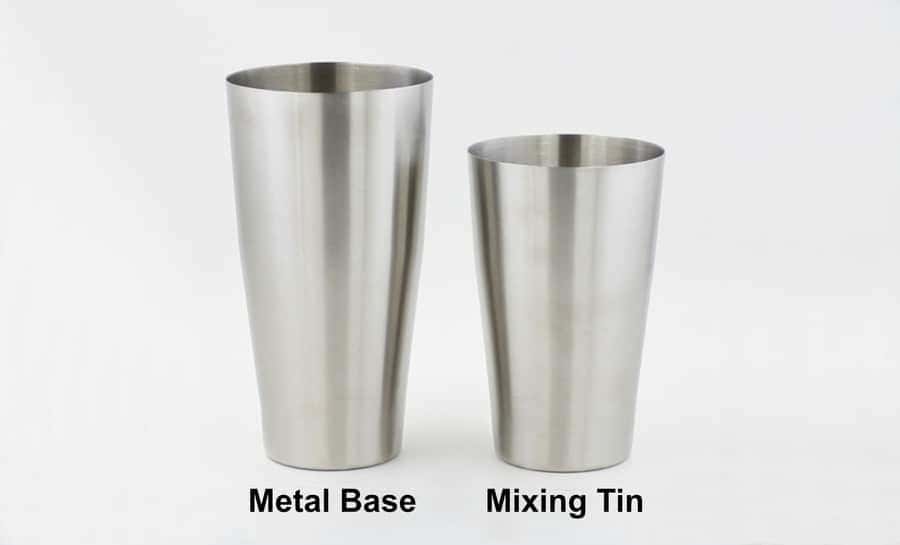
The Boston shaker is a two-piece design consisting of:
- A large metal tin (base) — typically 28 oz
- A smaller metal tin or mixing glass that seals over the top
It is the professional standard in commercial bars, cocktail lounges, and high-volume hospitality environments globally. Unlike the cobbler, it requires a separate Hawthorne or Julep strainer when pouring.
Pros:
- Fast and efficient — preferred for high-volume service
- Larger capacity (20–28 oz) accommodates more ice for better chilling
- Tight seal prevents leaks during vigorous shaking
- Allows for greater precision and technique
- No strainer clogging issues
- Easy to clean and sanitize
Cons:
- Requires a separate strainer (additional tool)
- Steeper learning curve — takes practice to seal and open correctly
- Less intuitive for beginners
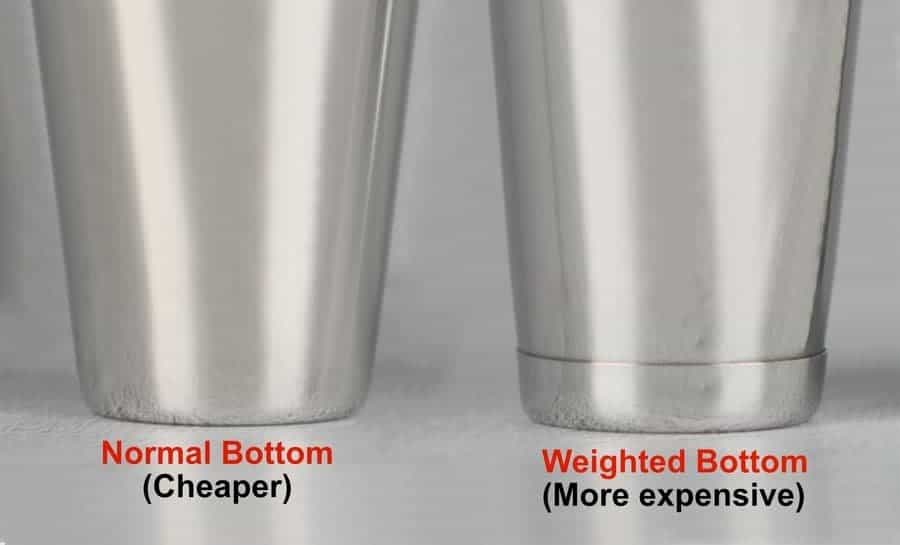
Best for: Professional bartenders, cocktail bars, high-volume hospitality, experienced home mixologists, and bar tool sets targeting the trade.
3. French Shaker (Parisian Shaker)
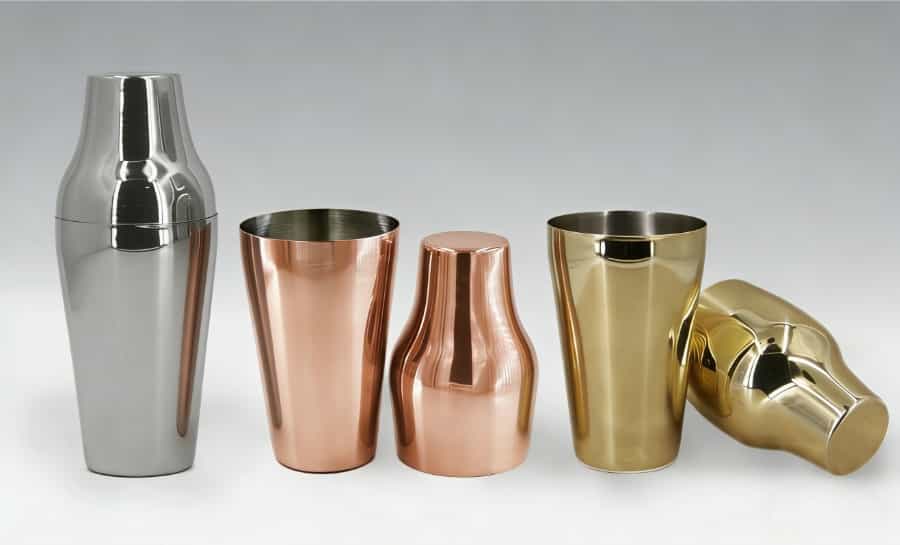
The French shaker, also known as the Parisian shaker, is a two-piece design consisting of:
- A metal base
- A fitted metal cap (no built-in strainer)
It shares the Boston shaker’s two-piece construction but features a more refined, tapered aesthetic. Capacity typically ranges from 18 to 22 oz. Like the Boston shaker, it always requires a separate strainer.
Pros:
- Elegant, minimalist design — a natural fit for upscale bars and premium product lines
- Easier to open than a cobbler shaker after shaking
- Two-piece construction is simple to clean
- Distinctive silhouette stands out on shelves and in brand photography
Cons:
- Smaller capacity than a Boston shaker
- Requires a separate strainer
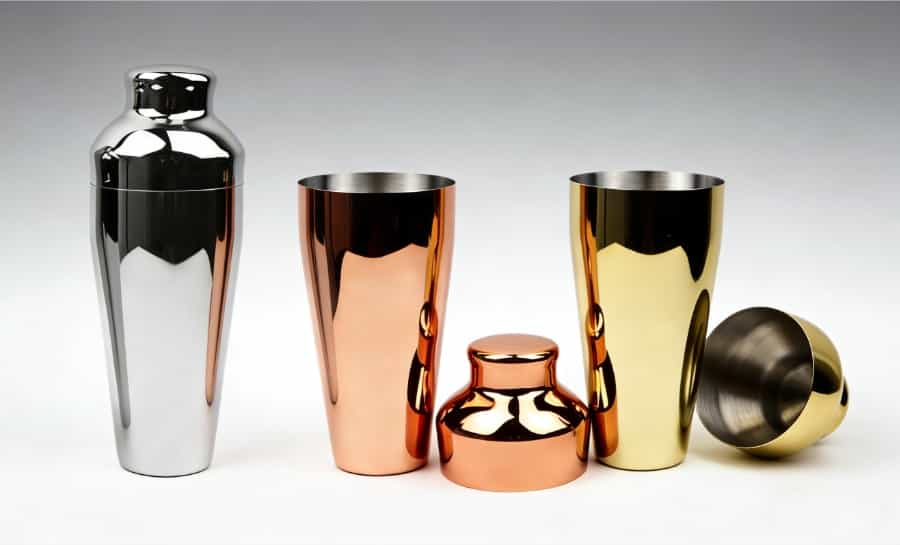
Best for: Upscale bars and restaurants, premium retail lines, boutique hotel programs, and brand-conscious barware collections.
Side-by-Side Comparison: Which Shaker Type Is Right?
| Feature | Cobbler Shaker | Boston Shaker | French Shaker |
|---|---|---|---|
| Pieces | 3 | 2 | 2 |
| Built-in strainer | Yes | No | No |
| Separate strainer needed | No | Yes | Yes |
| Capacity | 16–24 oz | 20–28 oz | 18–22 oz |
| Ease of use | Easy | Moderate | Moderate |
| Best user | Beginner / home | Professional | Premium / upscale |
| Aesthetic | Classic | Functional | Elegant |
| Common material | Stainless steel | Stainless steel | Stainless steel |
| Price tier | Budget–mid | Mid–premium | Mid–premium |
What to Consider When Choosing a Cocktail Shaker
Whether you’re equipping a home bar or selecting a shaker style for your product line, these are the key decision factors:
Type — Match the shaker style to the user’s skill level and bar environment. Cobbler for ease, Boston for professional use, French for premium aesthetics.
Material — Stainless steel (304 grade) is the industry standard for durability, corrosion resistance, and food safety. Glass offers visual appeal. Plastic is affordable but less durable and not suitable for professional use.
Capacity — Consider batch size. Home bartenders typically need 16–24 oz; professional bartenders benefit from the 28 oz capacity of a Boston tin.
Strainer setup — Decide whether a built-in strainer (cobbler) or a separate strainer (Boston/French) better suits the intended use and user experience.
Ease of use and cleaning — All three styles are easy to clean, but the cobbler’s three-piece design requires attention to the strainer holes. Boston tins are the fastest to rinse and sanitize in a commercial setting.
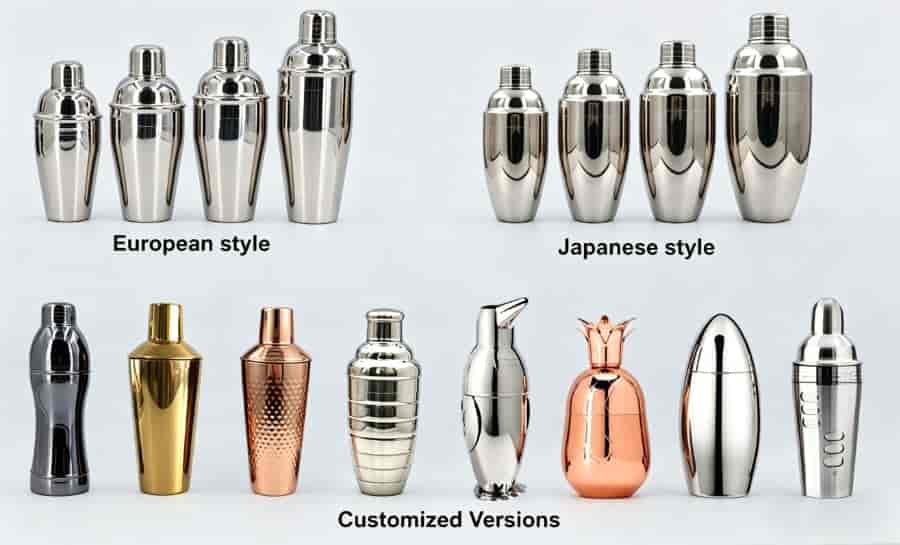
Surface finish and customization — For branded or premium retail products, consider available finishes: mirror polish, brushed, hammered, or PVD color coating (gold, rose gold, black, gunmetal).
Why Stainless Steel Is the Best Material for Cocktail Shakers
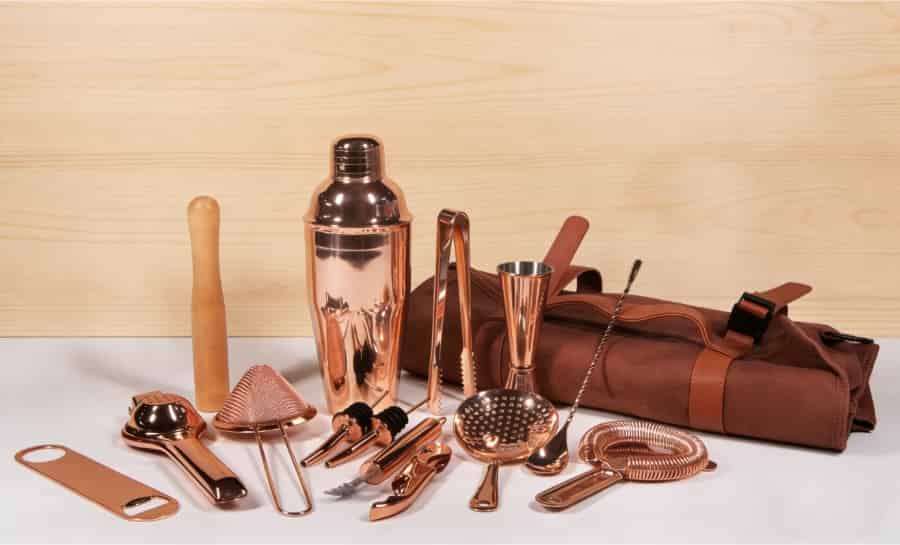
Across all three shaker types, 304 stainless steel is the preferred material for professional and premium applications. It offers:
- Excellent corrosion resistance — handles acidic cocktail ingredients without degrading
- No flavor or odor transfer — keeps cocktails tasting clean
- Long service life — withstands daily commercial use
- Hygienic and easy to sanitize
- Compatible with a wide range of surface finishes and custom treatments
- Compliant with FDA and LFGB food contact standards
For value-tier and promotional product lines, 201 stainless steel offers a cost-effective alternative with adequate performance for moderate use.
→ See our full material guide: 304 vs 201 Stainless Steel for Cocktail Shakers: What’s the Difference?
Frequently Asked Questions
What type of cocktail shaker is best for beginners?
The cobbler shaker is the easiest starting point — the built-in strainer means fewer tools to manage, and the three-piece design is intuitive to use and clean.
What cocktail shaker do professional bartenders use?
Most professional bartenders prefer the Boston shaker for its speed, larger capacity, and tight seal. It requires a separate strainer but offers greater control and efficiency in high-volume service.
What is the difference between a Boston shaker and a French shaker?
Both are two-piece designs without a built-in strainer. The key differences are size (Boston is larger, typically 28 oz; French is 18–22 oz) and aesthetic — the French shaker has a more tapered, elegant profile suited to upscale settings.
What material is best for a cocktail shaker?
304 stainless steel (18/8) is the professional standard — durable, non-reactive, hygienic, and available in a wide range of finishes. Glass is a stylish alternative for home use, while plastic is generally not recommended for serious cocktail-making.
Can you shake any cocktail in any shaker type?
Yes, all three shaker types can be used for standard shaken cocktails. The differences come down to ease of use, volume capacity, and straining method — not the type of drink.
Sourcing Cocktail Shakers for Your Business?
If you’re a bar supplier, importer, brand owner, or hospitality distributor looking to source cobbler, Boston, or French shakers at scale, we manufacture and wholesale stainless steel barware for B2B clients worldwide.
Why work with us:
- 🏭 Factory direct — competitive wholesale pricing across all shaker styles
- 🎨 Full OEM customization — custom logo (laser engraving, screen print, embossing), surface finish (mirror, brushed, hammered, PVD color), capacity, and packaging
- ✅ Certified & compliant — FDA, LFGB (EU), and ISO certified; full documentation provided
- 📦 Low MOQ — orders from 200 pcs per SKU
- 🌍 Global shipping — serving clients across North America, Europe, Australia, and Asia
Whether you need a single shaker style or a complete bar tool set, we’ll help you spec the right product for your market and customers. For a complete overview of shaker types, materials, and usage, visit our cocktail shaker guide.
Browse our cocktail shaker product range or contact us for custom OEM solutions.
Related reading: Types of Cocktail Strainers: Hawthorne, Julep, and Fine Mesh Explained | Types of Cocktail Jiggers: How to Choose | 304 vs 201 Stainless Steel for Cocktail Shakers: What’s the Difference?