Two shakers, two very different bartending experiences. This guide breaks down exactly how the Boston and Cobbler shakers differ — and helps you decide which one belongs behind your bar or in your product line.
The Short Answer
- Choose a Cobbler shaker if you’re a beginner, a home bartender, or sourcing for casual use and gifting — it’s self-contained, intuitive, and requires no additional tools.
- Choose a Boston shaker if you’re a professional bartender, running a commercial bar, or sourcing for the hospitality trade — it’s faster, more versatile, and the industry standard worldwide.
Not sure which applies to you? Read on.
What Is a Cobbler Shaker?
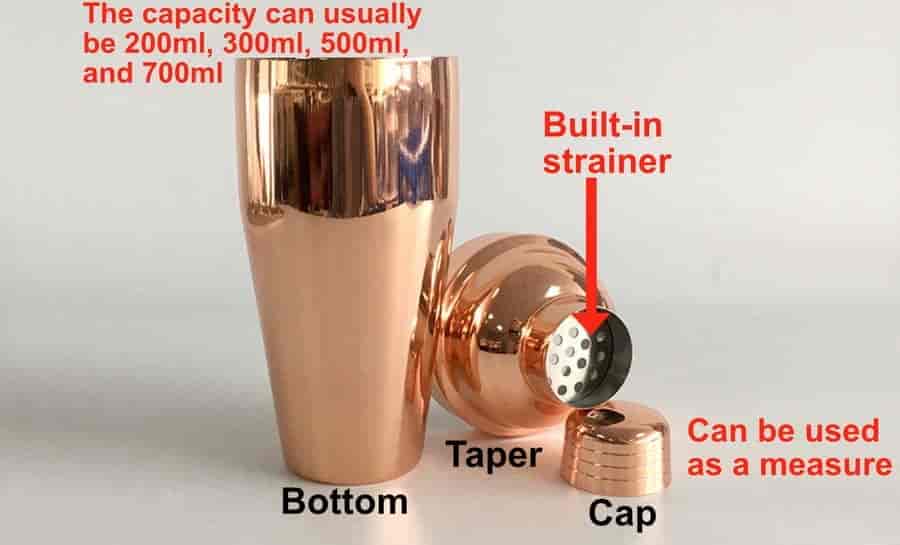
The Cobbler shaker is a three-piece design: a base that holds ice and ingredients, a lid with a built-in strainer, and a removable cap that doubles as a spirit measure. It is the most widely recognized cocktail shaker shape worldwide — the classic hourglass silhouette you’ll find in home bars, retail stores, and gift sets globally.
Everything you need is in one tool. No separate strainer, no extra equipment. Pour your ingredients in, shake, and strain directly into the glass.
What Is a Boston Shaker?
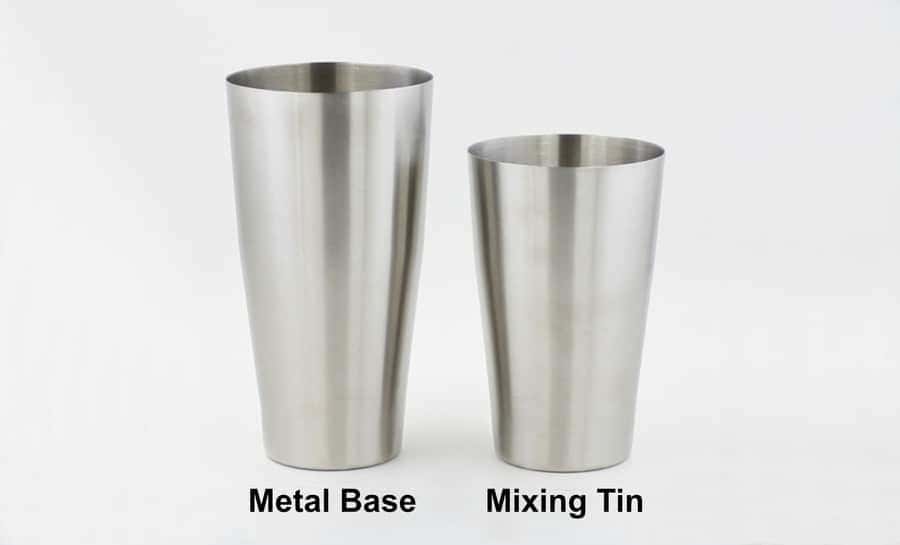
The Boston shaker is a two-piece design: a large metal tin (typically 28 oz) and a smaller tin or mixing glass that seals over the top. There is no built-in strainer — a separate Hawthorne strainer is always required when pouring. It is the dominant shaker style in professional bars, cocktail lounges, and hospitality programs globally.
What it lacks in self-contained convenience, it more than makes up for in speed, capacity, and versatility.
Key Differences: Boston vs Cobbler Shaker
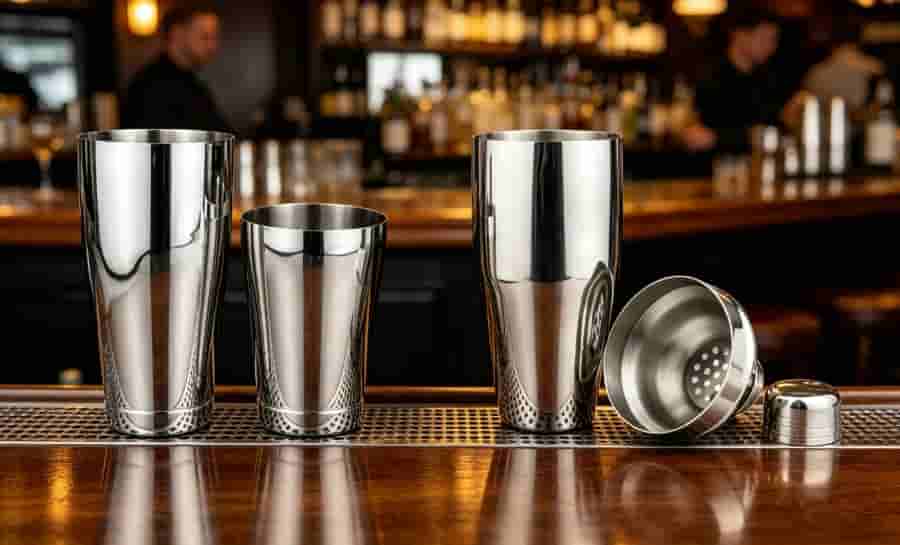
| Feature | Boston Shaker | Cobbler Shaker |
|---|---|---|
| Pieces | 2 | 3 |
| Built-in strainer | No | Yes |
| Separate strainer needed | Yes (Hawthorne) | No |
| Capacity | 20–28 oz | 16–24 oz |
| Seal type | Tin-on-tin or tin-on-glass | Lid press-fit onto base |
| Ease of use | Moderate (requires technique) | Easy (beginner-friendly) |
| Pour speed | Faster | Slower (strainer can clog) |
| Skill level | Intermediate–Professional | Beginner–Intermediate |
| Best environment | Commercial bar | Home bar / casual use |
| Typical material | 304 stainless steel | 304 or 201 stainless steel |
| Price tier | Mid–premium | Budget–mid |
Comparing Head to Head
Design and construction
The Cobbler shaker’s three-piece construction is elegant in its self-sufficiency — everything in one tool, ready to go. The downside is that after vigorous shaking, the temperature change creates a vacuum seal that can make the lid difficult to remove, particularly for beginners.
The Boston shaker’s two-piece construction is simpler and more robust. The seal between the two tins is created by a firm tap, and breaking it open after shaking is a learned technique — a sharp strike at the seam releases the seal cleanly. It takes practice, but once mastered it becomes second nature.
Straining
The Cobbler’s built-in strainer is convenient but limited. Under heavy use, the small holes can clog with ice chips, citrus pulp, or herb fragments, slowing the pour and requiring a shake to clear. It also provides less filtration than a spring-based Hawthorne strainer.
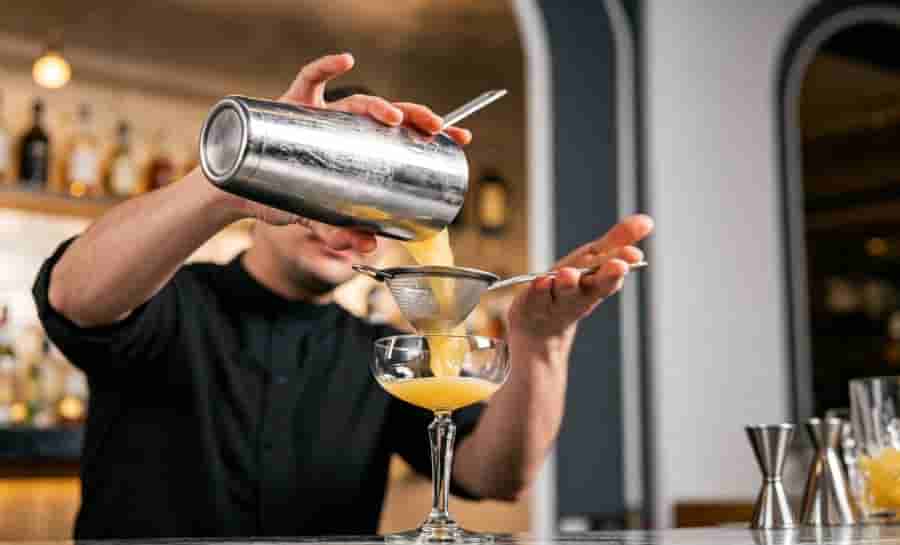
The Boston shaker paired with a quality Hawthorne strainer — especially a high-density spring variant — provides superior filtration and a faster, cleaner pour. For bartenders who double strain (using a fine mesh strainer alongside the Hawthorne), the Boston setup is the clear winner for cocktail texture and clarity.
Speed and efficiency
In a high-volume bar environment, speed matters. The Boston shaker is significantly faster to use once the technique is mastered — the larger tin accommodates more ice, the seal is secure and quick to break, and the wide mouth pours faster than a Cobbler’s strainer lid. Professional bartenders can produce two to three times more drinks per hour with a Boston shaker compared to a Cobbler.
For home use where speed is not a priority, this advantage is largely irrelevant.
Capacity
The Boston shaker’s larger tin (typically 28 oz) can handle double batches — two cocktails per shake — making it more practical for entertaining or service. The Cobbler’s smaller capacity generally limits it to single-serve or at most two-serve batches.
Ease of use and learning curve
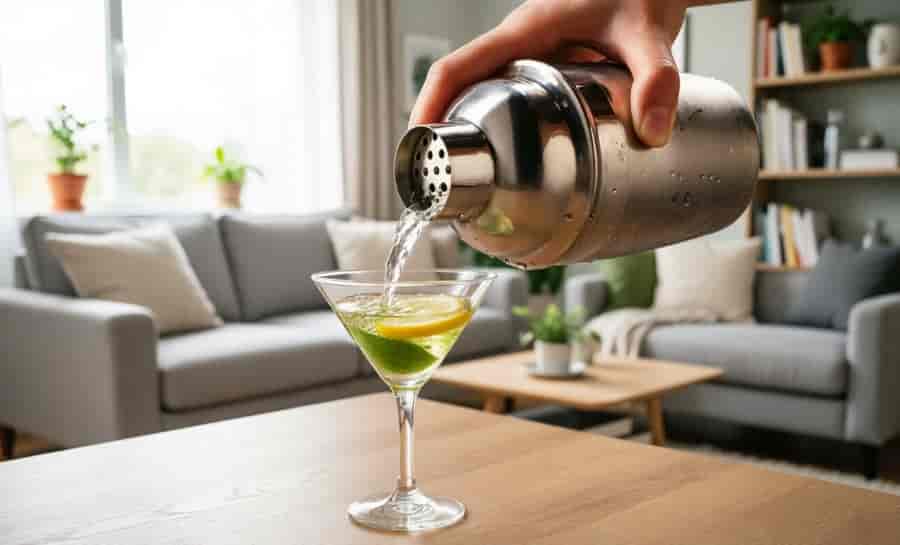
The Cobbler shaker wins on accessibility. There is genuinely nothing to learn — fill, cap, shake, pour. For someone new to cocktail making, this frictionless experience is valuable. It lets beginners focus on recipes and flavors rather than technique.
The Boston shaker has a learning curve. Sealing the tins correctly, breaking the seal cleanly, and pouring with a separate strainer all require practice. For a professional bartender this is a non-issue — but for a casual home user it can be frustrating initially.
Cleaning
Both shakers are easy to clean. The Boston shaker’s two tins are wide-mouthed and straightforward to rinse and sanitize. The Cobbler’s three-piece construction requires attention to the strainer holes, which can trap residue if not rinsed immediately after use. In a commercial bar where sanitization speed matters, the Boston shaker has a slight edge.
Which Is Better for Your Bar Program?
Choose a Boston shaker if:
- You are a professional bartender or training bartenders
- You operate a cocktail bar, restaurant bar, or hotel bar program
- You need to produce drinks quickly and consistently under volume
- You want the flexibility to double strain for premium cocktail texture
- You already own or stock a Hawthorne strainer
Choose a Cobbler shaker if:
- You are equipping a home bar or buying as a gift
- Your customers are beginner or casual home mixologists
- You want a self-contained tool with no additional accessories required
- You are sourcing for promotional barware, retail gift sets, or branded merchandise
- Price accessibility is a primary consideration
For product line buyers and distributors: The Cobbler shaker consistently outsells the Boston shaker in retail, e-commerce, and gift channels — its familiar shape and no-extras-required simplicity drives impulse and gift purchases. The Boston shaker dominates in trade and hospitality supply channels. Stocking both allows you to serve both markets cleanly.
Boston vs Cobbler: Material and Finish Options
Both shaker types are available in the same range of materials and surface finishes, giving buyers and brand owners flexibility to position either product across different price tiers.
Material options:
- 304 stainless steel (18/8) — professional grade, excellent corrosion resistance, FDA and LFGB compliant. Recommended for premium retail and hospitality supply.
- 201 stainless steel — cost-effective alternative, suitable for promotional products and value-tier retail.
Surface finish options:
- Mirror polish — classic, high-gloss, timeless
- Brushed finish — contemporary, hides fingerprints
- Hammered finish — premium handcrafted aesthetic, strong shelf presence
- PVD color coating — gold, rose gold, black, gunmetal, rainbow
- Spray Painting color – any Pantone color is available
→ See our full material guide: 304 vs 201 Stainless Steel for Cocktail Shakers: What’s the Difference?
Frequently Asked Questions
Is a Boston shaker better than a Cobbler shaker?
Neither is objectively better — they serve different users and environments. The Boston shaker is better for professional, high-volume bar use. The Cobbler shaker is better for beginners and home bars where simplicity and self-contained convenience matter more than speed.
Can a beginner use a Boston shaker?
Yes, but there is a learning curve. The main challenges are creating and breaking the tin-on-tin seal, and using a separate Hawthorne strainer correctly. With a little practice most beginners can master the basics within a few sessions.
Why do professional bartenders prefer the Boston shaker?
Speed, capacity, and versatility. The Boston shaker produces drinks faster, holds more volume, pairs with a Hawthorne strainer for superior filtration, and allows for double straining. In a high-volume commercial bar, these advantages compound significantly over a shift.
What strainer do I need for a Boston shaker?
A Hawthorne strainer is the standard pairing for a Boston shaker tin. For ultra-smooth cocktails — citrus sours, egg white drinks, fresh herb cocktails — add a fine mesh strainer and double strain. → See our full guide: Types of Cocktail Strainers: Hawthorne, Julep, and Fine Mesh Explained
Does the Cobbler shaker work for professional use?
It can, but most professional bartenders move away from it quickly. The built-in strainer is slower and less effective than a dedicated Hawthorne strainer, and the vacuum seal under the lid can slow service during high-volume periods.
What size Boston shaker should I choose?
The most common professional Boston shaker setup is a 28 oz large tin paired with an 18 oz small tin. This combination handles single and double batches comfortably and is the standard size stocked by most bar supply distributors.
Sourcing Boston and Cobbler Shakers for Your Business?
If you’re a bar supplier, importer, brand owner, or hospitality distributor looking to source Boston or Cobbler shakers at scale, we manufacture and wholesale both styles — in 304 and 201 stainless steel, across a full range of finishes and customization options — for B2B clients worldwide.
Why work with us:
- 🏭 Factory direct — competitive wholesale pricing on both Boston and Cobbler shaker styles
- 🎨 Full OEM customization — custom logo (laser engraving, screen print, embossing), surface finish (mirror, brushed, hammered, PVD color), sizing, and packaging
- ✅ Certified & compliant — FDA, LFGB (EU), and ISO certified; full material documentation provided
- 📦 Low MOQ — orders from 200 pcs per SKU
- 🌍 Global shipping — serving clients across North America, Europe, Australia, and Asia
Whether you need individual strainers or complete bar tool sets, we’ll help you spec the right product for your market. For a complete overview of shaker types, materials, and usage, visit our cocktail shaker guide.
Browse our cocktail shaker product range or contact us for custom OEM solutions.
Related reading: Types of Cocktail Shakers: Cobbler vs Boston vs French Explained | Types of Cocktail Strainers: Hawthorne, Julep, and Fine Mesh Explained | Cocktail Shaker Guide: Types, Materials & How to Choose