Whether you’re a professional bartender or a home mixology enthusiast, understanding the material of your cocktail shaker matters more than you’d think. This guide breaks down the key differences between 304 and 201 stainless steel — helping you make a smarter purchase.
What Is Stainless Steel? A Quick Overview
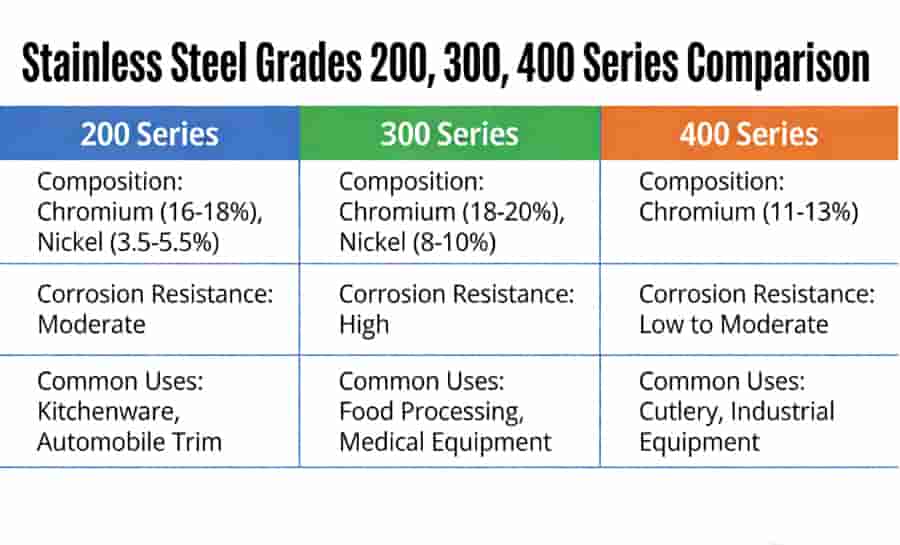
Stainless steel, also known as inox, corrosion-resistant steel (CRES), or rustless steel, is an alloy of iron that resists rusting and corrosion. Common stainless steel grades are represented by numerical series — the 200 series, 300 series, and 400 series — a classification system used by the American Iron and Steel Institute (AISI). Familiar grades include 201, 202, 302, 303, 304, 316, 410, 420, and 430.
Why Stainless Steel Is the Best Material for Cocktail Shakers
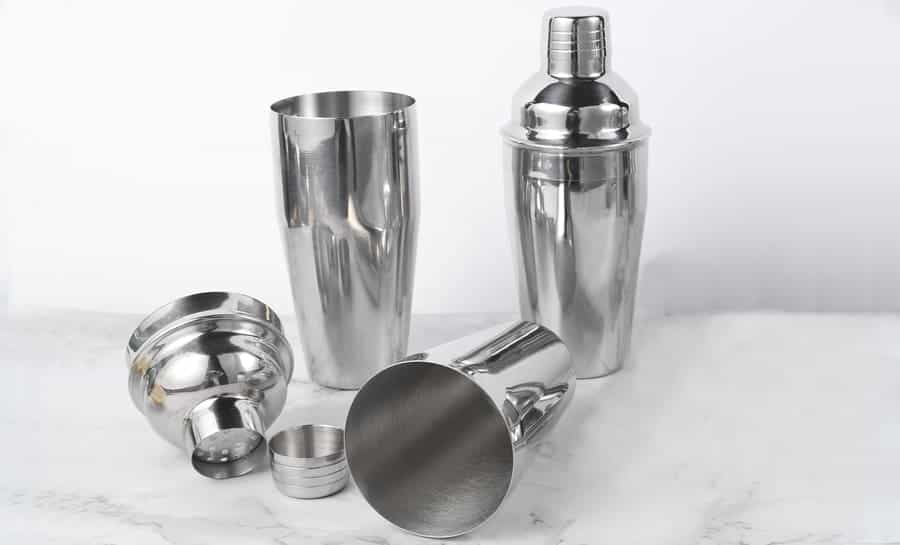
Stainless steel cocktail shakers are the most popular choice among bartenders worldwide — and for good reason. They are exceptionally durable, easy to clean, and highly resistant to rust and corrosion. Stainless steel also retains cold temperatures well, making it ideal for shaking cocktails with ice. The two most commonly used grades for cocktail shakers are 304 and 201 stainless steel.
304 Stainless Steel (18/8 or 18/10): The Premium Choice
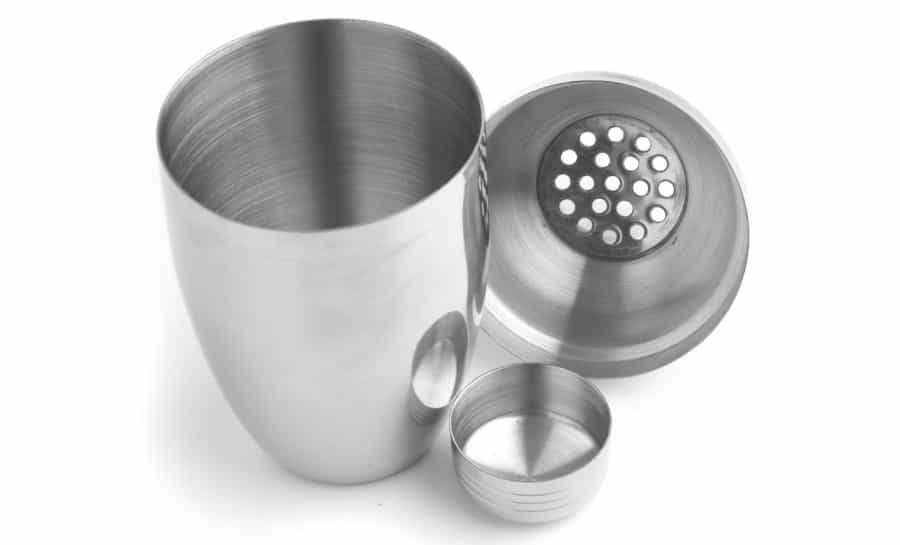
304 stainless steel is the gold standard for cocktail shakers and professional bar equipment. It is also referred to as 18/8 or 18/10 stainless steel, reflecting its composition of 18% chromium and 8% (or 10%) nickel. This combination gives it outstanding corrosion resistance, long-term durability, and a naturally bright, polished finish.
Composition and properties
- Chromium content: 18%
- Nickel content: 8–10%
- Corrosion resistance: Excellent — handles acidic cocktail ingredients (citrus, bitters) without degradation
- Surface finish: High-gloss, mirror-like shine
- Food safety: Fully food-grade and widely approved for kitchen and barware use
Why bartenders prefer 304 grade
304 stainless steel does not absorb odors or flavors, which is critical when crafting cocktails. Its higher nickel content creates a denser molecular structure that resists pitting and staining even with repeated exposure to salt, alcohol, and citrus juices. Premium cocktail shakers from professional brands almost exclusively use 304 grade.
201 Stainless Steel: The Budget-Friendly Alternative
201 stainless steel is a more affordable alternative in the austenitic stainless steel family. It substitutes a portion of nickel with manganese and nitrogen, reducing material costs while still maintaining acceptable performance for many applications.
Composition and properties
- Chromium content: 16–18%
- Nickel content: 3.5–5.5% (significantly lower than 304)
- Manganese content: Higher (used as a partial nickel substitute)
- Corrosion resistance: Moderate — adequate for dry or low-moisture environments, but less resistant to acidic or salty conditions
- Surface finish: Good, though slightly less brilliant than 304
Best use cases for 201 grade
201 stainless steel is widely used in applications where cost is the primary concern and exposure to harsh conditions is limited. For cocktail shakers used occasionally or stored in low-humidity environments, 201 can be a practical choice — though it may show signs of wear or discoloration faster than 304 with heavy use.
304 vs 201 Stainless Steel: Key Differences at a Glance
| Property | 304 Stainless Steel | 201 Stainless Steel |
|---|---|---|
| Chromium content | 18% | 16–18% |
| Nickel content | 8–10% | 3.5–5.5% |
| Corrosion resistance | Excellent | Moderate |
| Durability | High | Medium |
| Surface finish | High-gloss mirror | Good |
| Food-grade certification | Yes | Yes (limited) |
| Price | Higher | Lower |
| Best for | Professional / frequent use | Casual / budget use |
How to Tell 304 from 201 Stainless Steel at Home
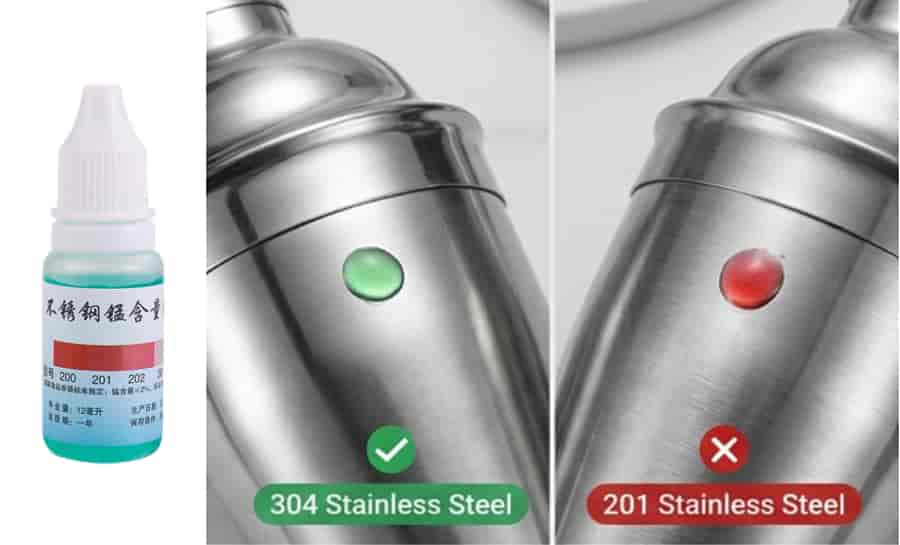
The most common and reliable method for distinguishing between 304 and 201 stainless steel is to use a chemical reagent test with a green molybdenum-based solution, widely available from lab suppliers and some kitchen equipment vendors.
How it works:
- Apply a small drop of the green reagent to the surface of the shaker
- Wait 1–2 minutes and observe the color change
- Stays green → 304 stainless steel
- Turns red → 201 stainless steel
This test works because the reagent reacts differently to the varying nickel concentrations in each grade.
Which Stainless Steel Should You Choose for Your Cocktail Shaker?
The right choice depends on your use case and budget:
- Choose 304 stainless steel if you’re a professional bartender, use your shaker daily, or regularly work with acidic ingredients like citrus and bitters. The superior corrosion resistance and durability justify the higher price over time.
- Choose 201 stainless steel if you’re an occasional home user, prioritizing affordability, or buying in bulk for events where long-term durability is less critical.
In both cases, understanding what you’re buying helps you set the right expectations — and get the most out of your bar tools. To better understand how different shaker types compare, see our detailed cocktail shaker guide.
Frequently Asked Questions
Is 304 stainless steel safe for cocktail shakers?
Yes. 304 stainless steel is fully food-grade and one of the most widely used materials in professional kitchen and barware worldwide.
What does 18/8 mean on a cocktail shaker?
18/8 refers to the steel’s composition: 18% chromium and 8% nickel. This is another name for 304 stainless steel, indicating its quality tier.
Can 201 stainless steel rust?
201 stainless steel has lower corrosion resistance than 304. While it won’t rust easily under normal conditions, prolonged exposure to moisture, salt, or acidic liquids may cause surface staining or pitting over time.
How do I know if my shaker is 304 or 201?
Use a green chemical reagent test (described above). Alternatively, check the product labeling or contact the manufacturer — reputable brands will specify the grade.
Ready to Source Stainless Steel Cocktail Shakers?
Whether you’re launching a new barware brand, expanding an existing product line, or sourcing for hospitality distribution, we’re ready to support your project — from material specification through to delivery.
Browse our cocktail shaker product range or contact us for custom OEM solutions.
Related reading: Types of Cocktail Shakers: Cobbler vs Boston vs French Explained | Types of Cocktail Strainers: Hawthorne, Julep, and Fine Mesh Explained | Types of Cocktail Jiggers: How to Choose