The French cocktail shaker is the most elegant of the three classic shaker styles — and the least understood. This guide covers everything you need to know: what makes it different, how to use it correctly, and how to choose the right one for your bar or product line.
What Is a French Cocktail Shaker?
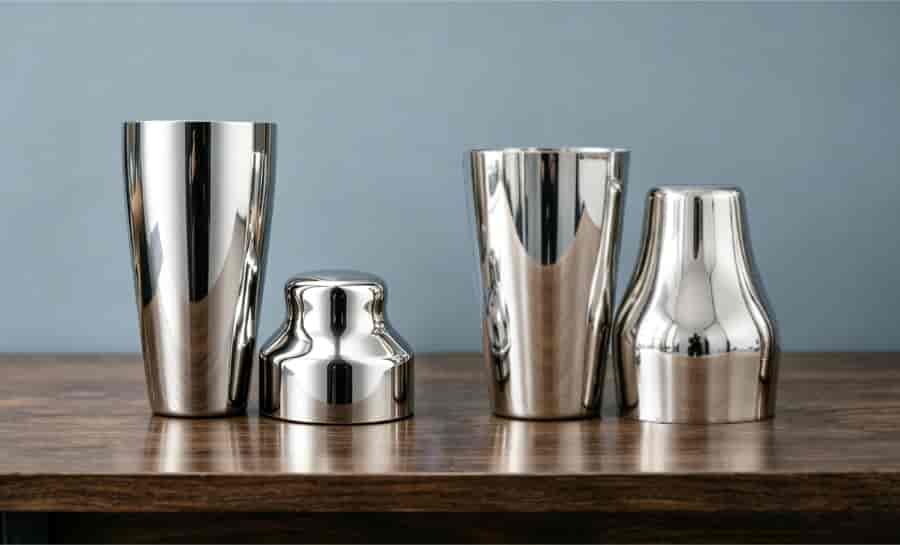
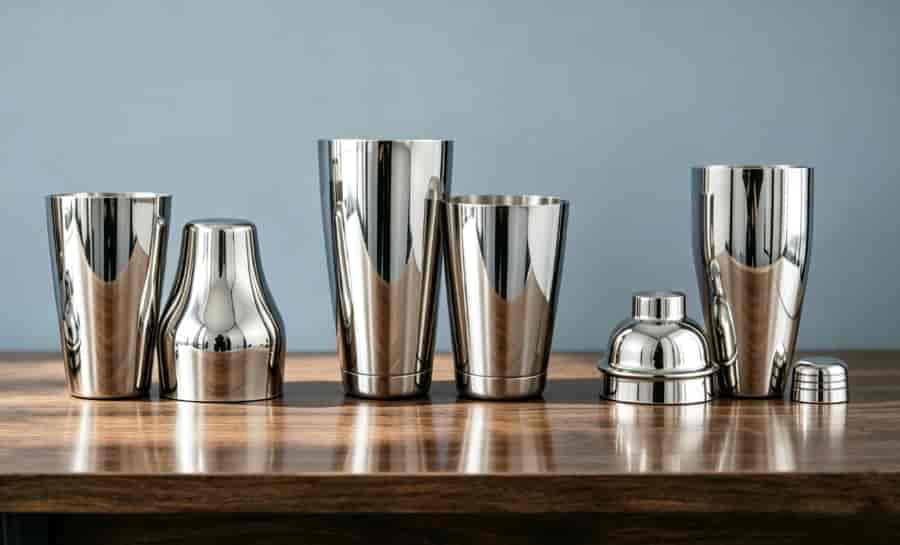
A French cocktail shaker — also known as a Parisian shaker — is a 2-piece cocktail shaker consisting of a metal base and a fitted metal cap. It is distinguished from the other two classic shaker styles by its elegant, curved silhouette: more refined than the Boston shaker, more streamlined than the Cobbler.
Like the Boston shaker, it has no built-in strainer — a separate Hawthorne or Julep strainer is always used when pouring. Like the Cobbler shaker, both pieces are roughly equal in size — there is no large tin and small tin relationship. The result is a shaker that combines the aesthetic appeal of the Cobbler with the functional efficiency of a 2-piece metal construction.
The terms “French shaker” and “Parisian shaker” are used interchangeably in the bar industry. Both refer to the same category of 2-piece all-metal shaker with a tapered or tulip-shaped profile. Within this category, there are slight variations in silhouette — the classic French style features a wider tapered base, while the Parisian style tends toward a more curved, tulip-shaped form — but functionally they are identical.
French Shaker vs Boston Shaker vs Cobbler Shaker
| Feature | French / Parisian Shaker | Boston Shaker | Cobbler Shaker |
|---|---|---|---|
| Pieces | 2 (metal base + metal cap) | 2 (large tin + small tin or glass) | 3 (base + strainer lid + cap) |
| Built-in strainer | No | No | Yes |
| Separate strainer needed | Yes | Yes | No |
| Capacity | 500–600ml | 500–800ml | 180–700ml |
| Silhouette | Tapered / tulip-shaped | Straight cylindrical | Hourglass |
| Seal type | Metal cap fits over base | Tin-on-tin or tin-on-glass | Press-fit lid |
| Ease of opening | Easy — sideways heel strike | Moderate — heel strike technique | Difficult — vacuum seal |
| Skill level | Intermediate | Intermediate–Pro | Beginner–Intermediate |
| Aesthetic | Elegant, European | Functional, professional | Classic, familiar |
| Best environment | Upscale bars, hotel programs | Commercial bars, high volume | Home bars, casual use |
→ See our full comparison: Types of Cocktail Shakers: Cobbler vs Boston vs French Explained
The History of the French / Parisian Shaker
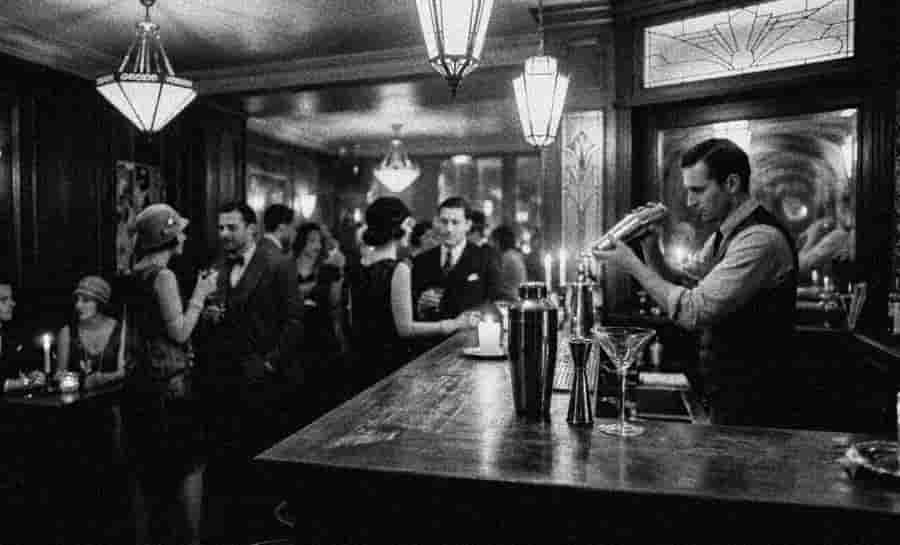
The French cocktail shaker emerged from European café and bar culture in the late 19th century — a period when cocktail making was becoming formalized as a craft on both sides of the Atlantic. While American bartenders were developing the Boston shaker for high-volume saloon service, European bars — particularly in Paris — favored a more refined aesthetic that reflected the elegance of their dining and café culture.
The 2-piece all-metal construction of the French shaker was a practical evolution from earlier single-cup measures, offering a tighter seal and more vigorous shaking capability than anything available at the time. Its tulip and tapered forms became associated with a distinctly European approach to cocktail making — one that prioritized elegance and presentation alongside performance.
The French shaker fell somewhat out of mainstream use during the mid-20th century as the Boston shaker became the global professional standard. However, the craft cocktail revival of the 2000s and 2010s brought renewed appreciation for the French shaker’s aesthetic qualities — and today it is firmly re-established as the shaker of choice for upscale bars, premium hotel programs, and barware brands targeting the premium market.
What Makes the French Shaker Different: Design Details
The Silhouette
The French shaker’s defining characteristic is its silhouette. Where the Boston shaker is a straight cylinder and the Cobbler an hourglass, the French shaker features a curved or tapered profile — widening at the body and narrowing at the neck — that gives it an immediately recognizable, sculptural quality on the bar top.
This form is not merely decorative. The curved body provides a comfortable grip during shaking, and the narrower neck makes the cap easier to align and seat correctly compared to a straight-sided design.
The 2-Piece All-Metal Construction
Both pieces of a French shaker are metal — typically 304 stainless steel. This is different from a Boston shaker where one piece is sometimes glass. The all-metal construction means:
- Consistent thermal properties — both pieces cool at the same rate during shaking, maximizing chilling efficiency
- No breakage risk — unlike tin-on-glass Boston setups, there is no glass component to crack or shatter
- Uniform finish — both pieces can carry the same surface finish and color treatment for a fully matched aesthetic
The Cap Seal
The French shaker cap fits snugly over the top of the base, creating a secure seal through a press-fit mechanism. After shaking, the seal releases with a sideways heel strike at the seam — significantly easier than the vacuum seal that forms on Cobbler shaker lids, which can be very difficult to remove after vigorous shaking with ice.
How to Use a French Cocktail Shaker
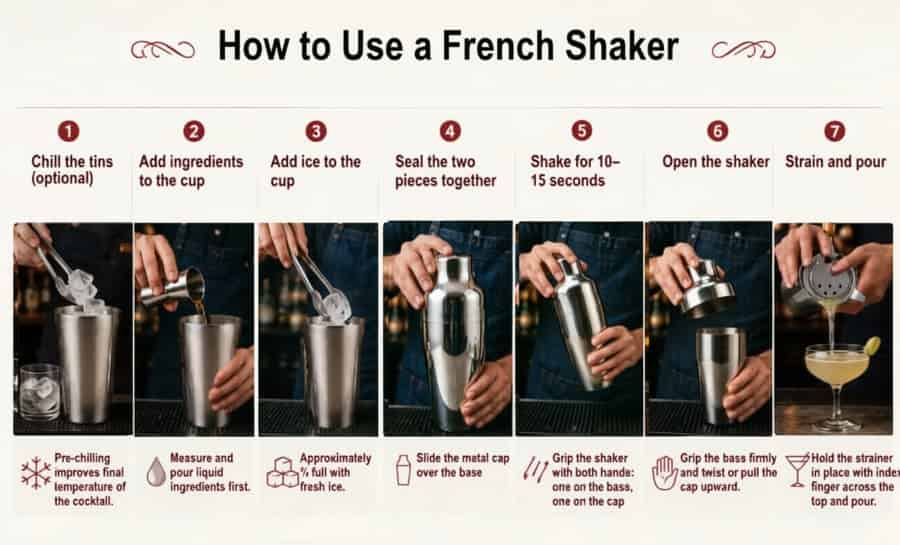
Using a French shaker correctly takes a little practice, but the technique is straightforward once learned.
Step 1: Add ingredients Measure all liquid ingredients using a jigger and pour into the base of the French shaker. Add cheaper or non-alcoholic ingredients first (juice, syrup, citrus), then the spirit.
Step 2: Add ice Fill the base approximately ¾ full with fresh ice. Use plenty — adequate ice is essential for proper chilling and dilution.
Step 3: Seal the cap Slide the metal cap firmly onto the base, ensuring it is seated evenly around the rim. Apply firm downward pressure to confirm the seal before shaking. Unlike a Boston tin-on-tin seal, the French shaker cap does not require an angled press — it seats straight down.
Step 4: Shake Hold the shaker with both hands — one on the base, one on the cap — and shake vigorously for 10–15 seconds. The shaker will become very cold quickly; a frost on the outside indicates proper chilling. Keep a firm two-handed grip throughout.
Step 5: Break the seal After shaking, grip the base firmly in one hand. With the heel of your other hand, strike the seam — the junction between base and cap — with a firm sideways motion. The cap should release cleanly in one strike. Do not attempt to twist or pull the cap upward, which can damage the fit over time.
Step 6: Strain and pour Place a Hawthorne strainer over the mouth of the base and pour steadily into the serving glass. For an ultra-smooth cocktail, hold a fine mesh strainer over the glass simultaneously (double straining).
Tips:
- If the cap is difficult to remove, ensure you are striking at the seam, not the body of the cap
- Never shake carbonated ingredients — add soda water or tonic directly to the glass after straining
- Pre-chill the French shaker with cold water or ice before use for better temperature retention
Why Bartenders and Bars Choose the French Shaker
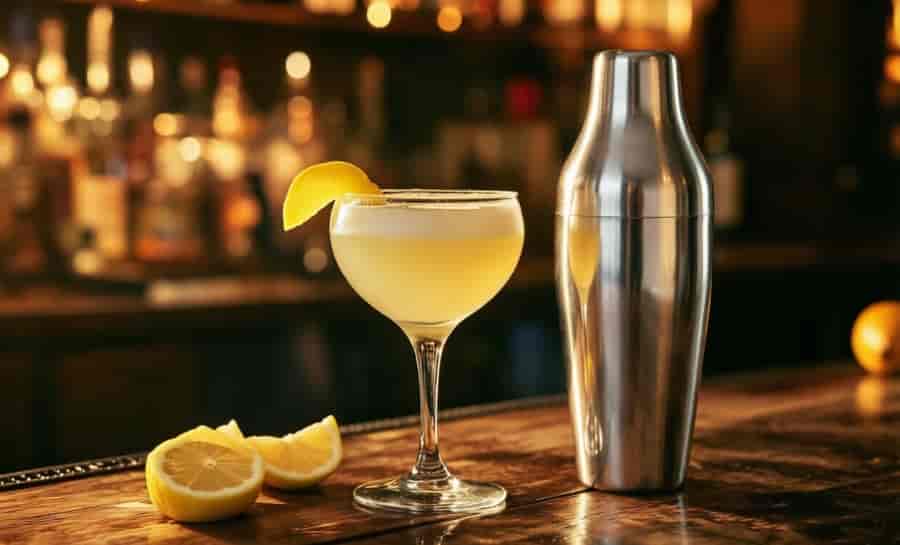
Aesthetic differentiation In a competitive bar market, visual identity matters. The French shaker’s distinctive silhouette creates a memorable bar top presence that a Boston tin or Cobbler shaker cannot match. For upscale cocktail bars, boutique hotel programs, and venues where the guest experience includes the visual theatre of the bar, the French shaker is a deliberate design choice.
Easier to open than a Cobbler The vacuum seal that forms on a Cobbler shaker lid after vigorous shaking is a well-known frustration — particularly during busy service. The French shaker’s metal cap releases cleanly with a single heel strike, making service faster and less disruptive.
More elegant than a Boston The Boston shaker is the professional workhorse — efficient and fast, but visually industrial. For bars where presentation is part of the brand, the French shaker delivers the same 2-piece functionality in a far more refined package.
No plastic components Unlike some Cobbler shakers that include plastic strainer inserts or caps, the French shaker is entirely metal — more durable, easier to sanitize, and more consistent in appearance over time.
Strong customization canvas The French shaker’s smooth, curved surface is an excellent canvas for logo engraving, PVD color coating, hammered textures, and transfer printing. For barware brands building a premium product line, the French shaker offers strong visual impact with full customization flexibility.
French Cocktail Shaker Sizes
French cocktail shakers are available in two main capacity configurations:
| Model | Dimensions | Volume | Weight | Best for |
|---|---|---|---|---|
| French Style | D90 × H230mm | 600ml | 286g | Standard and larger serves, events |
| Parisian Style | D82 × H220mm | 550ml | 285g | Single and standard double serves |
The 600ml French style shaker (D90 × H230mm) is the larger of the two — with a wider base that accommodates generous ice loads and is well suited to both single and larger batch serves.
The 550ml Parisian style shaker (D82 × H220mm) has a slimmer diameter that provides a more comfortable one-hand grip during shaking. Its tulip-shaped curve is more pronounced — a classic Parisian silhouette that is particularly popular in upscale bar programs and premium retail.
Both sizes are available in the full range of surface finishes and color options.
Surface Finish & Customization Options
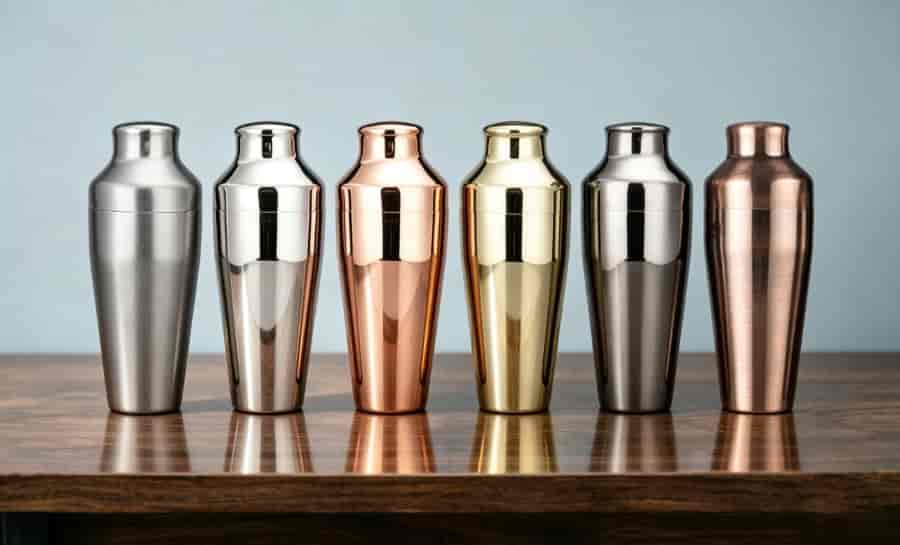
Both French and Parisian style shakers are available in the full range of surface finishes:
Base textures: Mirror polish, brushed, hammered, vintage, laser-engraved decorative pattern
Electroplating (brighter color): Copper, Gold, Gunmetal, Antique Copper, Antique Brass
PVD coating (deeper color): Rose Gold, Gold, Titanium Gold, Black, Gunmetal, Rainbow
Spray paint: All Pantone colors
Transfer printing: Wood grain, marble, brand graphics
Logo application: Laser engraving, screen printing, embossing
→ See our full finish guide: Barware Surface Finishes: A Complete Guide
How to Choose the Right French Shaker
Choose the French Style (600ml) if:
- You need slightly more capacity for generous ice loads or larger serves
- You prefer a wider grip with a broader base profile
- You are sourcing for events or hospitality programs where volume per serve varies
Choose the Parisian Style (550ml) if:
- You prefer the classic tulip silhouette and slimmer grip
- Your bar program focuses on precision single and standard double serves
- You are sourcing for upscale cocktail bars or premium retail where the Parisian aesthetic is a deliberate brand choice
For both:
- Pair with a Hawthorne strainer (and fine mesh for double straining)
- Specify your preferred surface finish and color when ordering
- Available from 200 pcs MOQ with full OEM logo and packaging customization
Frequently Asked Questions
What is a French cocktail shaker?
A French cocktail shaker is a 2-piece all-metal cocktail shaker with a tapered or tulip-shaped silhouette — also known as a Parisian shaker. It consists of a metal base and a fitted metal cap, and requires a separate strainer when pouring. It is used in the same way as a Boston shaker but with a more elegant, refined aesthetic.
What is the difference between a French shaker and a Parisian shaker?
The terms are used interchangeably in the bar industry — both refer to the same style of 2-piece all-metal cocktail shaker. Some manufacturers use “French shaker” to describe a wider tapered form and “Parisian shaker” for a more curved tulip form, but functionally they are identical.
Do you need a strainer with a French cocktail shaker?
Yes. French and Parisian shakers have no built-in strainer. A separate Hawthorne strainer is always required when pouring a shaken cocktail. For the smoothest result, add a fine mesh strainer for double straining.
How do you open a French cocktail shaker after shaking?
Hold the base firmly in one hand. With the heel of your other hand, strike the seam — the junction between the base and cap — with a firm sideways strike. The cap releases cleanly in one motion. Do not twist or pull the cap upward.
Is a French shaker suitable for beginners?
The French shaker has a moderate learning curve — primarily the technique for sealing and opening the cap. It is easier to open than a Cobbler shaker (no vacuum seal issue) but requires slightly more practice than a Cobbler to seal correctly. For complete beginners, a Cobbler shaker is the easier starting point.
What capacity is a French cocktail shaker?
French and Parisian shakers typically range from 500ml to 600ml. Our French Style shaker is 600ml (D90 × H230mm) and our Parisian Style shaker is 550ml (D82 × H220mm).
Can French cocktail shakers be customized with a logo?
Yes. Both French and Parisian style shakers support laser engraving, screen printing, and embossing for logo application, along with a full range of surface finishes and PVD color options. MOQ from 200 pcs.
Sourcing French Cocktail Shakers for Your Business?
If you’re a bar supplier, importer, brand owner, or hospitality distributor looking to source French or Parisian cocktail shakers at scale, we manufacture and wholesale both styles — in 304 stainless steel, across a full range of finishes and customization options — for B2B clients worldwide.
Why work with us:
- 🏭 Factory direct — competitive wholesale pricing on both French and Parisian shaker styles
- 🎨 Full OEM customization — custom logo, surface finish, PVD color, and packaging
- ✅ Certified & compliant — FDA, LFGB (EU), and ISO certified; full documentation provided
- 📦 Low MOQ — orders from 200 pcs per SKU
- 🌍 Global shipping — serving clients across North America, Europe, Australia, and Asia
Browse our cocktail shaker product range or contact us for custom OEM solutions.
Related reading: Types of Cocktail Shakers: Cobbler vs Boston vs French Explained | Boston Shaker vs Cobbler Shaker: Which One Is Right for You? | How to Use a Cocktail Shaker: Step-by-Step Guide | Cocktail Shaker Guide: Types, Materials & How to Choose