Weighted shaker tins feel balanced and stay put on the bar, while standard tins are lighter and cost less. Neither makes a better drink on its own. The choice comes down to feel, budget, and who will use the shaker. This guide compares weighted shaker tins with standard Boston tins so you can pick the right one for your bar, your customers, or your product line.
Quick answer:
- Choose weighted shaker tins for professional bars, premium sets, and bartenders who like a balanced, stable feel.
- Choose standard tins for budget lines, high-volume sets where cost per unit matters, and casual home use.
What Is Boston Shaker Tin?
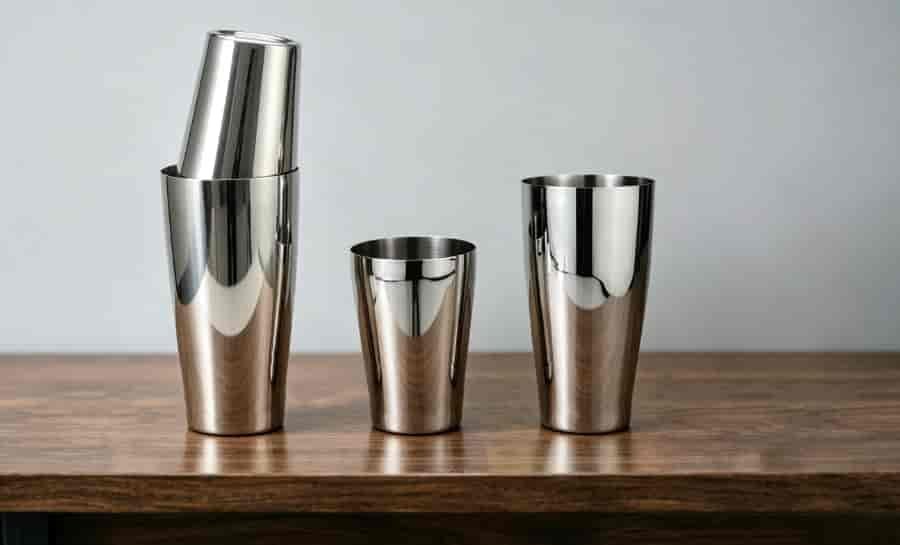
Boston shaker is one of the classic shaker styles described on Wikipedia. It is a two-piece shaker: a large metal tin and a smaller tin or mixing glass that seals over it. It is the professional standard in commercial bars because it is fast, holds more ice, and seals tightly. It needs a separate strainer, usually a Hawthorne strainer.
The most common professional set is a 28 oz large tin with an 18 oz small tin. For a full size breakdown, see our cocktail shaker sizes guide. To compare Boston with other styles, see Boston vs Cobbler Shaker.
What Are Weighted Shaker Tins?

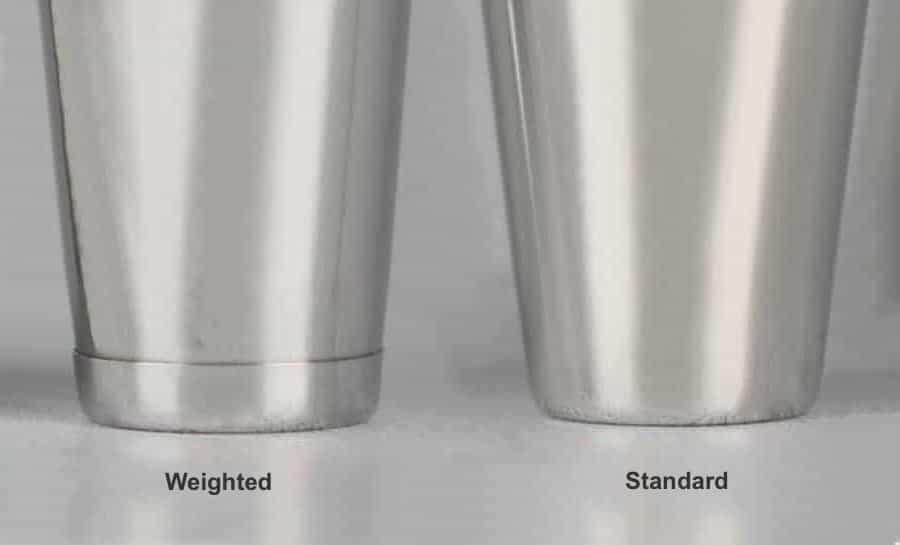
Weighted shaker tins have extra weight built into the base, which shifts the balance of the tin toward the bottom. The weight is most commonly added to the larger tin. The result is a tin that feels heavier in the hand, sits more steadily on the bar, and is less likely to tip when set down.
Weighted shaker tins are sold as a weighted Boston cocktail shaker or as part of a Boston set with one weighted tin and one standard tin.
What Are Standard (Unweighted) Shaker Tins?
Standard tins have an even, lighter body with no added weight in the base. It is simple, easy to handle, and costs less. Standard tins are common in value sets, promotional barware, and bars that go through many tins.
Weighted Shaker Tins vs Standard Tins: Side-by-Side
| Feature | Weighted Tin | Standard Tin |
|---|---|---|
| Weight in hand | Heavier, base-balanced | Lighter, even |
| Stability on the bar | More stable, less likely to tip | Tips more easily when empty |
| Shaking feel | Balanced, steady | Light, quick |
| Fatigue over a long shift | Can feel heavier | Lighter |
| Price tier | Mid to premium | Budget to mid |
| Drink quality | Same (depends on ice, technique, seal) | Same |
| Best for | Professional bars, premium sets, brand lines | Value sets, promotions, casual use |
Chilling and dilution depend on the ice, the shaking time, and the seal, not on whether the tin is weighted.
Pros and Cons of Weighted Shaker Tins
Pros:
- Balanced, stable feel when shaking and when set down
- A premium, solid impression, which helps in retail and gift sets
- Less likely to tip over on a busy bar
- A clear step up in a product range for quality-focused buyers
Cons:
- Heavier, which some bartenders find tiring over a long shift
- Higher cost than a standard tin
- Quality depends on how the weight is built in (see the buyer checklist below)
- Higher shipping weight per set
Pros and Cons of Standard Tins
Pros:
- Lower cost per unit, good for value lines and promotions
- Light and quick to handle
- Simple construction
Cons:
- Tips more easily when empty
- A lighter, less premium feel
- Less differentiation in a premium product line
Which Should You Choose?
| If you are… | Choose |
|---|---|
| A professional bartender or running a cocktail bar | Weighted, if you like a balanced feel. Standard is fine if you prefer light tins |
| A hotel or hospitality group building a bar program | Weighted for the main bar, standard for back-up or high-turnover stations |
| A home bartender | Standard, unless you want the premium feel |
| A brand owner or distributor building a premium line | Weighted as the flagship, standard as the entry price point |
| Sourcing for promotions or budget retail | Standard |
Many buyers stock both. A standard set covers the entry tier and a weighted set anchors the premium tier.
For technique, such as sealing and opening the tins, see our guide on how to use a cocktail shaker.
What to Check When Buying Weighted Shaker Tins in Bulk
Weighted shaker tins vary more in quality than standard tins. Before you place a bulk order:
- How the weight is built in. Ask whether it is sealed into the base or a separate piece. A loose weight can rattle or shift.
- Weight consistency. Ask for the target weight of the tin and check a sample batch, since uneven weights make a set feel inconsistent.
- Seal fit. Check that the weighted tin and the small tin or glass seal tightly and release cleanly. Tins from different makers often do not match.
- Base finish and welds. Look at the bottom, seams, and edges for clean polishing and no sharp spots.
- Material. 304 stainless steel is the safer choice for premium and commercial use.
- Documents. Ask for food-contact test reports. We can provide FDA and LFGB test reports for our stainless steel shakers.
- A sample first. Test a sample set before committing to volume.
Surface Finish & Customization Options
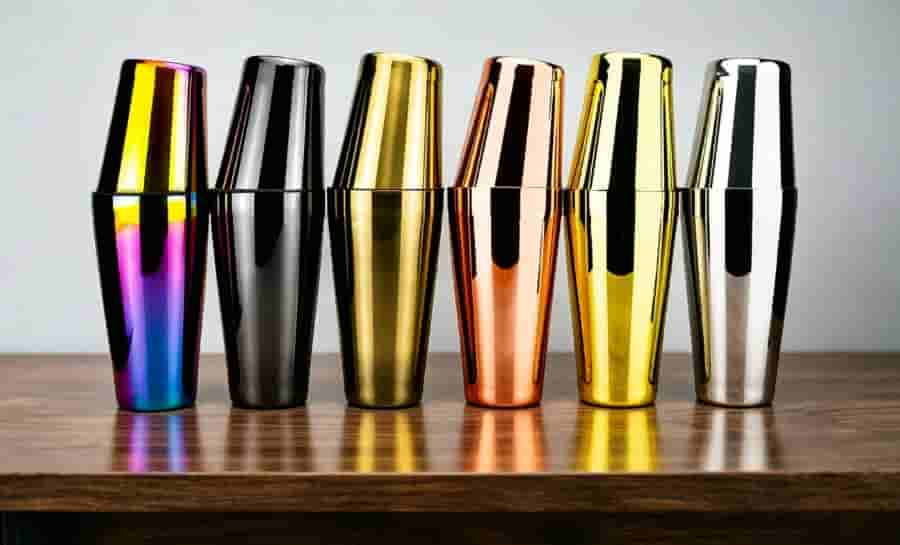
All of our Boston shaker tins are available in the full range of surface finishes:
Base textures: Mirror Polish, Brushed, Hammered, Vintage, Laser-engraved Decorative Pattern
Electroplating (brighter color): Copper, Gold, Gunmetal, Antique Copper, Antique Brass
PVD coating (deeper color): Rose Gold, Gold, Titanium Gold, Black, Gunmetal, Rainbow
Spray paint: All Pantone Colors
Transfer printing: Wood Grain, Marble, Brand Graphics
Logo application: Laser Engraving, Screen Printing, Embossing
→ For a full comparison of surface options, see our guide to barware surface finishes.
Frequently Asked Questions
Do weighted shaker tins make better cocktails?
No. Weight changes the feel and stability of the tin, not the drink. Chilling, dilution, and texture depend on the ice, how long you shake, and how well the tins seal.
Are weighted Boston shakers worth it?
They are worth it if you value a balanced feel, a stable base, and a premium look. For casual home use or budget lines, a standard tin is usually enough.
Which tin is weighted in a Boston set?
The weight is most commonly in the larger tin. Check the product description for your set.
Can I use a weighted tin with a pint glass?
Yes. A weighted tin can be paired with a smaller tin or a mixing glass, as long as the two fit together and seal properly.
Are weighted tins heavier to ship?
Yes. They weigh more per set, which can affect freight cost on large orders.
Can you customize weighted shaker tins with my logo?
Yes. We offer custom logo, finish, color, and packaging. Contact us with your design and target quantity.
Sourcing Boston Shaker Tins for Your Business?
If you’re a bar supplier, importer, brand owner, or hospitality distributor looking for weighted or standard Boston shaker tins at scale, we manufacture and wholesale stainless steel barware for B2B clients worldwide.
Why work with us:
- 🏭 Factory direct — competitive wholesale pricing on both French and Parisian shaker styles
- 🎨 Full OEM customization — custom logo, surface finish, PVD color, and packaging
- ✅ Certified & compliant — FDA, LFGB (EU), and ISO certified; full documentation provided
- 📦 Low MOQ — orders from 200 pcs per SKU
- 🌍 Global shipping — serving clients across North America, Europe, Australia, and Asia
Browse our weighted Boston cocktail shaker and Boston cocktail shaker or contact us for custom OEM solutions.
Related reading: Cocktail Shaker Guide: Types, Materials, Use & Care | Boston vs Cobbler Shaker: Which One Is Right for You? | Cocktail Shaker Sizes | Types of Cocktail Strainers: Hawthorne, Julep, and Fine Mesh Explained